Jennifer
Senior Travel Consultant

Vivian
Travel Consultant

Chanson
Travel Consualtant
Start with the stories of Confucius and his family in Qufu, then spend the next day following an ancient path up Mount Tai. This 2-day private journey connects some of Shandong's most meaningful cultural and natural landmarks without trying to squeeze too much into a short trip. You'll have time to explore, walk, eat well, take in the scenery, and let our team handle the transportation and daily logistics.
- Experience the cultural roots of China in the hometown of Confucius
- See the imperial grandeur and family history behind Qufu's Three Confucian Sites
- Slow down among ancient trees, courtyards, monuments, and centuries of history
- Swap cultural exploration for an active day on the trails of Mount Tai
- Follow the ancient stone steps all the way toward one of China's most iconic summits
- Travel comfortably with private transportation, local guidance, and flexible pacing
FROM $255 per person
Prices vary depending on group size, hotel standards, and how you'd like to tailor your itinerary.
Your first day begins with a convenient pickup from your Qufu hotel or Qufu East Railway Station, depending on where you arrive. If you are coming by high-speed train, we' ll arrange the pickup around your arrival time so you can start sightseeing without having to figure out local transportation.
Today is all about getting to know Qufu, the hometown of Confucius. Rather than rushing from one landmark to another, we'll take you through the three sites in a natural order, giving you time to understand how they connect with one another.
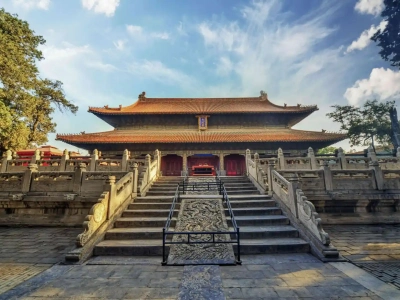
We'll start at Confucius Temple, the most important place to understand the historical status of Confucius in China. Built around the former residence of Confucius, the temple was expanded and rebuilt by successive dynasties as Confucius' influence and status grew. What you see today is therefore much more than an ordinary temple. Its scale, layout, and architecture reflect the exceptionally high level of respect Confucius received from successive emperors. As you walk along the central axis, you' ll pass through traditional gates, courtyards, pavilions, ancient cypress trees, and numerous stone inscriptions. One of the most interesting things to notice is how closely the temple resembles an imperial architectural complex. That tells you quite a lot about how important Confucianism became to Chinese political and cultural life.
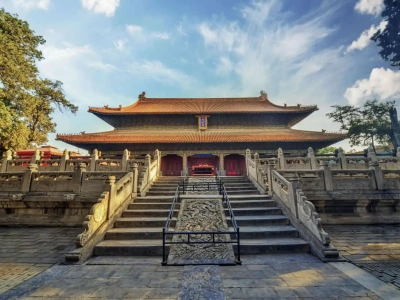
Eventually, you' ll reach Dacheng Hall, the main building of the temple. This is where the atmosphere becomes especially impressive. Take a moment to look at the details of the architecture and the surrounding stone tablets rather than simply stopping for a photo. Our guide can also explain the stories behind the imperial visits, inscriptions, and changes in Confucius' status over the centuries, so the buildings feel much more meaningful than a collection of historic structures.
From Confucius Temple, we' ll continue to Confucius Mansion, which gives you a very different perspective. If the temple tells the story of how Confucius was honored, the mansion shows you how his descendants actually lived. Confucius Mansion was the long-term residence and administrative center of the Kong family. During the Song Dynasty, the 45th-generation descendant of Confucius was granted the hereditary title of "Duke Yansheng." The title continued for more than 700 years, making it one of the longest-lasting hereditary official positions in Chinese history. As you move through the mansion, you' ll notice that it is not simply a large traditional residence. The complex combines government offices, reception halls, family courtyards, and private living quarters. The further you go inside, the more personal the atmosphere becomes. This is also where the history becomes surprisingly relatable. Instead of only hearing about famous historical figures, you get a glimpse into the daily structure of a family that remained influential for generations. We' ll point out details such as the courtyard layout, old trees, gates, and buildings that reveal the strict hierarchy and lifestyle of a traditional Chinese elite family.
After the morning sightseeing, we' ll stop for lunch at a local restaurant in Qufu. You can try local Shandong dishes and Qufu specialties, and we' ll keep the meal comfortable rather than making it overly formal. After lunch, you' ll have a short break before we continue to the final part of the day.
Our last stop is Confucius Cemetery, and the atmosphere changes almost immediately. Compared with the grand halls of Confucius Temple and the courtyards of Confucius Mansion, the cemetery feels much quieter and more natural. Confucius Cemetery has been used for more than two thousand years and contains the tombs of Confucius and many generations of his descendants. It is considered one of the largest and longest-continuously used family cemeteries in the world. The most memorable part is not simply seeing Confucius' tomb. As you walk through the cemetery, you' ll pass beneath large numbers of ancient cypress and pine trees, with stone tablets and tombs appearing among the greenery. The combination of old trees, weathered stone, and centuries of family history gives the place a completely different feeling from the first two sites. Take your time here. If the weather is pleasant, this is the best part of the Three Confucian Sites to slow down and simply walk. It gives you a chance to absorb the scale of the history you have encountered during the day.
After the visit, we' ll drive you back to your Qufu hotel. You' ll have the evening free to relax and prepare for tomorrow' s mountain hike.
After breakfast, we' ll pick you up from your Qufu hotel and drive to Mount Tai in a private air-conditioned vehicle. The journey usually takes around 1–1.5 hours, depending on traffic.
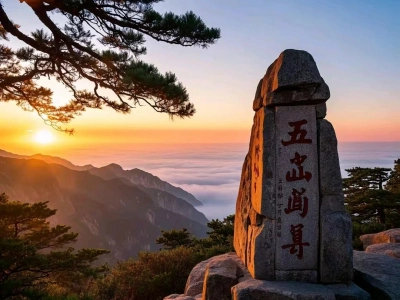
Once we arrive at Mount Tai, we' ll begin the classic hiking route, following the traditional approach toward the summit. If you want to experience Mount Tai properly rather than simply taking a vehicle or cable car to the top, this is the route we recommend. The trail gradually leads you upward through forests and historic sections of the mountain. Along the way, you' ll encounter old stone gates, temples, ancient trees, and countless inscriptions carved into rocks and cliffs. This is what makes Mount Tai different from simply visiting a scenic mountain. The trail itself is part of Chinese history. For centuries, emperors, scholars, pilgrims, and ordinary travelers have followed these same paths toward the summit.
The first sections are relatively manageable, but the climb becomes more demanding as you get higher. There are plenty of stone steps, so we' ll keep the pace according to your fitness level rather than trying to rush you to the top. Feel free to stop for water, photos, or a short rest whenever you need one.
Around midday, we' ll arrange lunch and a break during the hike, depending on your pace and the conditions on the mountain. Mountain dining is naturally more limited than in the city, so we' ll keep things simple and practical. The priority is to give you enough time to refuel without turning lunch into a long stop when you still have climbing ahead.
After your break, we' ll continue toward South Heaven Gate (Nantianmen). The higher you climb, the more dramatic the trail becomes, and the stone steps start to feel like a real achievement. Reaching South Heaven Gate is one of those moments when you realize how much ground you' ve covered. Beyond the gate, the landscape opens up and you' ll continue along the high mountain ridge toward the summit.
The Heaven Street area is particularly enjoyable on a clear day. The mountain ridge, distant hills, and city far below gradually come into view. After spending hours surrounded by trees and stone steps, suddenly having such a broad panorama in front of you feels like a reward in itself.
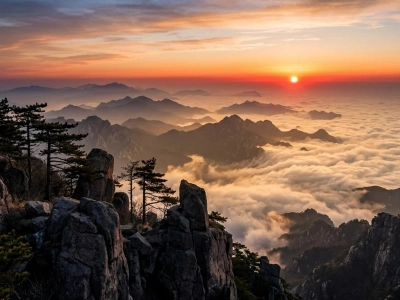
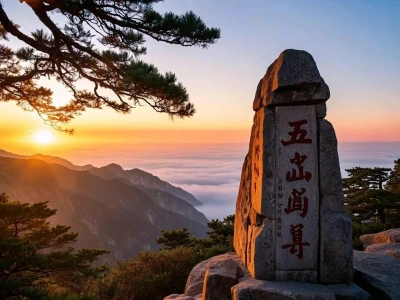
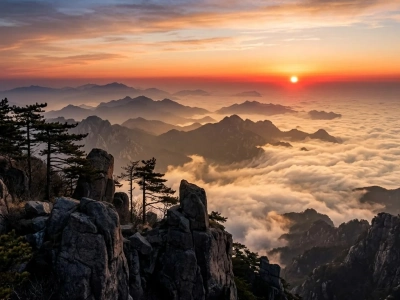
From here, we' ll continue toward Jade Emperor Peak, the highest point of Mount Tai. When you finally reach the summit, take a moment before reaching for your camera. Look back at the route you' ve just walked and you' ll understand why climbing Mount Tai on foot feels so different from simply arriving at the top by cable car. On a clear day, you can look across the surrounding mountains and plains, with Tai' an far below. If the mountain is covered in mist or clouds, don' t be disappointed. Mount Tai can look completely different in changing weather, and the clouds drifting around the peaks often create an atmosphere of their own. We' ll give you enough time at the summit to rest, take photos, and enjoy the view before beginning your descent.
After the hike, we' ll arrange your private transfer to Tai'an Railway Station, your hotel, or your next destination, depending on your travel plans. If you are catching a high-speed train, we' ll work backward from your departure time to make sure you have enough time to descend the mountain and reach the station comfortably.
And that brings the two-day journey to an end: from the ancient halls of Confucius Temple and the family history of Qufu to the stone steps and open skies of Mount Tai. It' s a short trip, but it gives you two very different sides of Shandong—its deep cultural roots and its iconic mountain landscapes.

* Leave Yours Questions & Answers or Review
A Surprisingly Easygoing Day
Thanks, Niamh! We're really happy you enjoyed the slower pace. We know nobody wants to spend a whole day watching the clock. Glad everything felt easy and comfortable, and we hope you enjoyed the rest of your time in Shandong!
Definitely a workout!
Thanks, Merritt! And yes, Mount Tai has a way of reminding you that "a lot of stairs" means a LOT of stairs. Glad you had time to enjoy the climb without feeling pushed. Reaching the top on your own two feet is definitely something to be proud of!
A Much Easier Day Than We Expected
Thank you, Carys! The stairs can be a bit of a surprise, so we're glad the pace worked well for you. And yes, knowing when to save your legs is half the battle on Mount Tai!
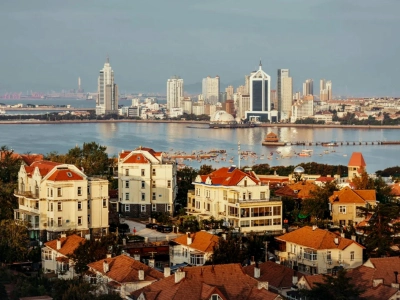
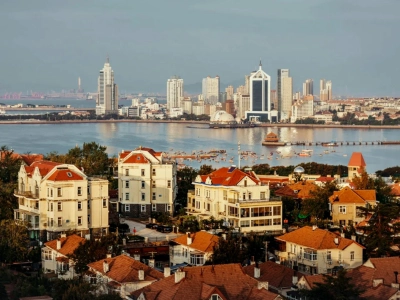
A Great First Taste of Qingdao
Thanks, Ione! We're glad the two days gave you a good first feel for Qingdao. And we agree — after a full day of walking, having the car waiting for you is a small luxury!
Before creating your itinerary, our travel specialists take the time to understand your interests, preferences, travel style, and expectations. We carefully plan every part of your journey, from route design and daily schedules to sightseeing experiences and local activities, making sure the pace, destinations, and experiences are perfectly matched to your needs.
We personally select and work with trusted hotels, transportation providers, professional guides, and local partners who meet our standards for quality, comfort, cleanliness, and reliability. From comfortable accommodations and well-maintained vehicles to knowledgeable local experts, every service is carefully chosen to ensure a smooth and enjoyable travel experience.
About 1–2 weeks before your departure, our team will contact you to go over the final details of your trip. We'll reconfirm your itinerary, hotels, transportation, and special requests, answer any last-minute questions, and provide all essential travel information, including contact details, arrival instructions, and helpful travel tips, so you can arrive in China fully prepared and travel with confidence.
Our support does not end after your trip begins. Throughout your journey, our team stays connected and ready to assist with any questions, schedule adjustments, transportation coordination, or unexpected situations. With local support available when you need it, you can relax and focus on enjoying your China experience with confidence.
Share your travel goals and preferences with us. From logistics to local experiences, we will craft a comprehensive, tailor-made plan and detailed cost breakdown to ensure a seamless trip.
Phone/WhatsApp
+86-190-1697-6605
buerchinatravel/+86-190-1697-6605
>12 years old
2~11 years old
>12 years old
2~11 years old