Tiananmen Square (天安门广场) is one of the most famous landmarks in Beijing, China, located in the very center of the city along its historic north–south axis. It connects key sites such as the Forbidden City with major government buildings, making it both a geographic and symbolic heart of China.
As one of the largest public squares in the world, Tiananmen Square is surrounded by important landmarks, including Tiananmen Gate, the Monument to the People's Heroes, the Great Hall of the People, and the National Museum of China. Together, these buildings form a powerful architectural group that reflects both China's history and modern identity.
The square's origins go back to imperial Beijing in the Ming and Qing dynasties, but its current large-scale layout was mainly developed in the 1950s. Since then, it has become a key site for national ceremonies and important historical events.
For visitors, Tiananmen Square is more than just a sightseeing stop. It offers a clear introduction to Beijing's history, culture, and political significance. Whether you are exploring nearby attractions like the Forbidden City or learning about China's modern development, Tiananmen Square Beijing China is an essential part of any Beijing itinerary.
What Is Tiananmen Square?
Overview of Tiananmen Square
Tiananmen Square is one of the most iconic public squares in the world and a central landmark in Beijing, China. Located in the heart of the city, it serves as a symbolic and geographical focal point of the capital. The square is not only a major tourist attraction but also an important civic and historical space that reflects China's modern development and national identity.
Covering a vast open area in central Beijing, Tiananmen Square is known for its monumental scale and carefully planned urban layout. It lies along Beijing's historic north–south central axis, a traditional line of imperial city planning that connects key cultural and political landmarks. To the north of the square stands the Tiananmen Gate, which leads directly into the Forbidden City, the former imperial palace of the Ming and Qing dynasties. This direct alignment visually and symbolically links imperial China with modern China.
Surrounding Tiananmen Square are several of the country's most important national buildings and monuments, each contributing to its political and cultural significance:
- Tiananmen Gate – The historic entrance to the Forbidden City and one of the most recognizable symbols of Beijing
- Monument to the People's Heroes – A towering memorial located at the center of the square, dedicated to those who died in revolutionary struggles
- Chairman Mao Memorial Hall – The mausoleum where Mao Zedong's preserved body is displayed to the public
- Great Hall of the People – The meeting place of China's national legislature and major state ceremonies
- National Museum of China – One of the largest museums in the world, showcasing Chinese history and culture from ancient times to the modern era
Together, these structures form a powerful architectural ensemble that defines the identity of Tiananmen Square as both a civic space and a national symbol.
Why Is Tiananmen Square Important?
Tiananmen Square holds exceptional importance in China's modern history and continues to play a central role in national life. It is widely recognized as a site where major historical events, political milestones, and public ceremonies have taken place, making it one of the most significant squares in the world.
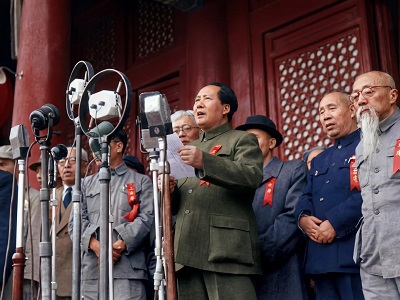
Historically, the square has been closely associated with key moments in China's 20th-century development, including the founding of the People's Republic of China in 1949. Since then, it has remained a focal point for national identity and collective memory.
In addition to its historical role, Tiananmen Square is also a major venue for state ceremonies, national celebrations, and large-scale public gatherings. Events such as National Day celebrations and official commemorations are often held here, reinforcing its status as the symbolic heart of the nation.
From an urban perspective, the square is also a masterpiece of large-scale city planning. Its design reflects a combination of traditional Chinese axial symmetry and modern monumental architecture. The surrounding buildings, wide open spaces, and carefully arranged sightlines demonstrate how architecture, politics, and public space are integrated in the center of Beijing.
Overall, Tiananmen Square is important on three interconnected levels:
- Historical – as a witness to major events in modern Chinese history
- Political and ceremonial – as a stage for national ceremonies and public gatherings
- Architectural and urban – as a landmark example of planned civic space in a capital city
Where Is Tiananmen Square?
Tiananmen Square Location
- Tiananmen Square is located in the very heart of Beijing city center
- It sits directly on Beijing's traditional north–south central axis, a historic urban planning line that connects the city's most important imperial and political landmarks
- North side: Tiananmen Gate (the iconic entrance to the Forbidden City)
- South side: Zhengyang Gate / Qianmen area, one of Beijing's historic commercial districts
- East side: National Museum of China, showcasing Chinese history and culture
- West side: Great Hall of the People, the venue for major national political events
Because of this central position, Tiananmen Square is not just a landmark—it is the geographical and symbolic core of Beijing.
Tiananmen Square and the Forbidden City
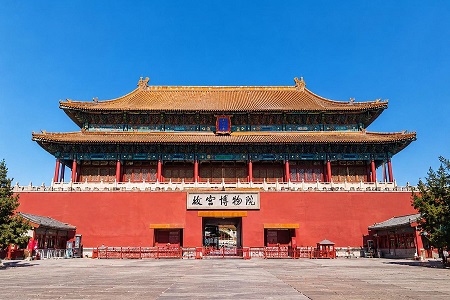
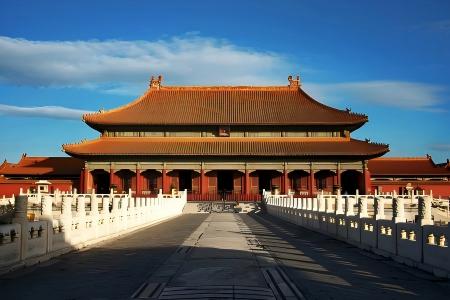
Tiananmen Square is directly connected to the Forbidden City, forming one continuous historical and architectural axis.
- The square lies immediately south of Tiananmen Gate, which serves as the formal entrance to the Forbidden City
- From the square, visitors can clearly see Tiananmen Gate, making it one of the most photographed viewpoints in Beijing
- Historically, this route represents the transition from public political space (the square) to imperial space (the palace complex)
For travelers, the most natural sightseeing route is to combine both attractions in a single visit:
- Start at Tiananmen Square
- Walk north toward Tiananmen Gate
- Continue into the Forbidden City
Because of their proximity and shared historical significance, it is highly recommended to visit Tiananmen Square and the Forbidden City on the same day for a complete understanding of Beijing's imperial and modern history.
How to Get to Tiananmen Square
There are several convenient ways to reach Tiananmen Square, depending on your location in Beijing:
Subway
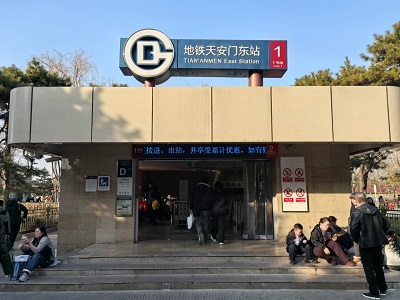
The Beijing subway is the most efficient option. The closest stations include Tiananmen East Station and Tiananmen West Station (Line 1). From either station, it is a short walk to the square, but security checkpoints must be passed before entry.
Taxi / Ride-hailing
Taxis and ride-hailing services like Didi are widely available. However, due to traffic restrictions and security zones around the square, you may be dropped off at a designated perimeter area and need to walk the final distance.
Walking from nearby attractions
Tiananmen Square is within walking distance of several major landmarks, including Qianmen Street, the Forbidden City, and parts of central Beijing's historic core. Walking is a great option if you are already exploring the area.
Important travel tip
Visitors should always check the latest opening policies, security requirements, and possible access restrictions before visiting. Entry procedures may change during national holidays, major events, or official ceremonies, and security checks are strictly enforced.
Tiananmen Square History
Tiananmen Square's history is deeply tied to the evolution of Beijing itself, stretching back to imperial times and gradually transforming into the vast public space we see today. The origins of the area date back to the Ming Dynasty, when Beijing was established as the capital and the imperial city was carefully planned along a strict central axis. At that time, the gate we now know as Tiananmen was originally called Chengtianmen, serving as a ceremonial entrance to the Imperial City. During the Qing Dynasty, the name was changed to Tiananmen, and the surrounding area remained a highly restricted and symbolic part of the imperial capital, closely connected to the Forbidden City and the political heart of China.
For centuries, this space was not an open square in the modern sense, but rather a controlled imperial zone where access was limited and highly ceremonial. It wasn't until the modern era that the area began to change in both function and design. As Beijing transitioned from an imperial capital to a modern political center, the space in front of Tiananmen gradually opened up and was reimagined as a public square. This transformation accelerated in the mid-20th century, when large-scale urban redevelopment reshaped the area into a monumental civic space. By the 1950s, the basic layout of today's Tiananmen Square had already begun to take form, marking a major shift from imperial enclosure to national public space.
The most significant transformation came during the major expansion project in the late 1950s. In 1958, a large-scale redevelopment plan was launched in preparation for the 10th anniversary of the founding of the People's Republic of China. This project dramatically enlarged the square and introduced several of its most important surrounding buildings. The Great Hall of the People, the National Museum of China (formed through the merger of earlier institutions), and other major structures were constructed during this period, giving the square its modern monumental character. By 1959, much of the construction work had been completed, and Tiananmen Square had taken on the iconic form that continues to define it today. This period is often regarded as the moment when Tiananmen Square history entered its modern architectural and political phase.
When Was Tiananmen Square Built?
There is no single year that can fully answer the question of when Tiananmen Square was built, because its development spans several historical eras. The area itself has existed since the Ming Dynasty, when the imperial capital of Beijing was first established and the Tiananmen gate became part of the city's central axis. However, what we recognize today as an open, large-scale public square is the result of gradual transformation rather than a single construction event.
The modern identity of Tiananmen Square began to take shape in the 20th century, especially after the founding of the People's Republic of China in 1949, when the square became the site of the historic founding ceremony. The most decisive stage of its physical construction, however, took place in the 1950s, when the area was significantly expanded and redesigned into one of the largest public squares in the world. This period fundamentally defined the spatial layout and symbolic role of Tiananmen Square as a national civic center.
Key Dates in the Development of Tiananmen Square
The evolution of Tiananmen Square can be better understood through a series of key historical milestones. In 1417, during the Ming Dynasty, the construction of Beijing's imperial city established the early foundation of the Tiananmen area along the central axis of the capital. By the 17th century, the name Tiananmen had become firmly established and continued into the Qing Dynasty, when the gate and surrounding area remained an important ceremonial space within the imperial system.
In the early 20th century, particularly from the 1910s onward, the function of the area began to shift gradually as Beijing modernized and imperial restrictions weakened. A major turning point came in 1949, when the founding ceremony of the People's Republic of China was held in Tiananmen Square, marking its emergence as a national political symbol. The most transformative physical changes occurred between 1958 and 1959, when the square was dramatically expanded and reshaped into its current monumental form. Later, in 1976–1977, the construction and opening of the Mao Zedong Memorial Hall further reinforced the square's role as a site of national memory and public significance.
Important Events Held at Tiananmen Square
Tiananmen Square has long been the symbolic heart of modern China and the setting for many key national events. One of the most important moments in its history took place on October 1, 1949, when the founding ceremony of the People's Republic of China was held here. From the Tiananmen Gate, Mao Zedong announced the establishment of the new government, marking a major turning point in Chinese history and establishing the square as a national symbol of unity and state power.
Since then, Tiananmen Square has been the main venue for annual National Day celebrations on October 1. These events often include large public gatherings, cultural performances, and military parades, reflecting national pride and historical continuity. Over time, the square has become closely associated with these large-scale ceremonies and public expressions of national identity.
In addition to National Day events, the square has hosted many important national ceremonies, including commemorations, state funerals, and official diplomatic gatherings. Its large open space and central location make it a key site for events of national importance.
One of the most widely known and sensitive events in its modern history is the 1989 student-led protests. This period of political and social unrest attracted global attention and has been widely studied and discussed in historical and political contexts. It remains an important and complex part of Tiananmen Square's historical narrative.
Top Landmarks to See at Tiananmen Square
Tiananmen Gate
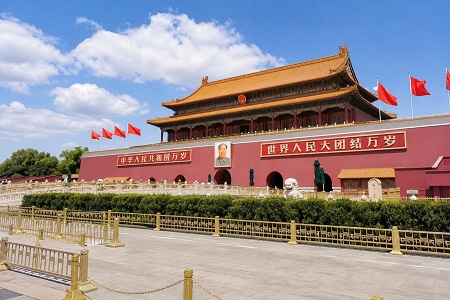
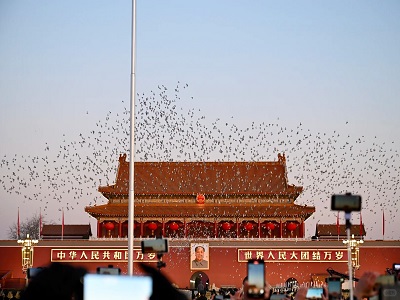
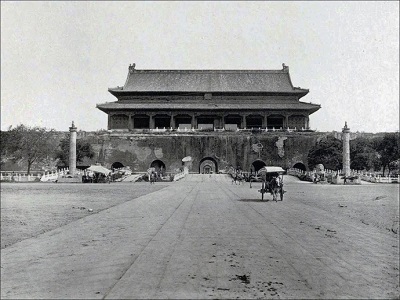
Tiananmen Gate (天安门城楼) is one of the most iconic structures in Beijing and serves as the symbolic entrance to the Forbidden City. Originally built in the early 15th century during the Ming Dynasty, it was first known as “Chengtianmen” and later renamed “Tiananmen,” meaning “Gate of Heavenly Peace.”
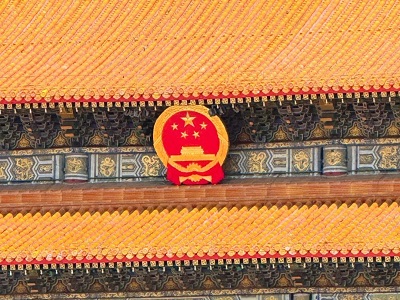
Architecturally, the gate reflects traditional Chinese imperial design, featuring a grand wooden structure with a multi-tiered roof covered in yellow glazed tiles, a color historically reserved for the emperor. The red walls and golden roof create a striking visual contrast that has become one of the most recognizable images of China.
Tiananmen Gate is also the origin of the name “Tiananmen Square,” as the square lies directly in front of it. Historically, the gate marked the ceremonial entrance to the imperial palace complex, reinforcing its importance in both political and symbolic terms.
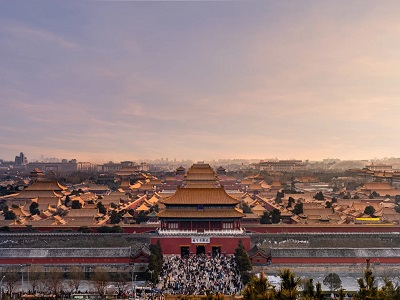
Positioned precisely along Beijing's central north–south axis, Tiananmen Gate plays a key role in the city's traditional urban planning, aligning with the Forbidden City, Jingshan Park, and other major historical landmarks.
Monument to the People's Heroes
The Monument to the People's Heroes stands at the very center of Tiananmen Square, making it the focal point of the entire open space.
It was constructed in the 1950s as a national memorial dedicated to those who sacrificed their lives in revolutionary struggles throughout modern Chinese history.
The monument carries deep symbolic meaning, representing collective remembrance and national identity. It is often used as a site for official commemorations and public ceremonies.
Architecturally, the monument is a large granite obelisk-style structure, approximately 37 meters tall. Its base is decorated with eight massive relief sculptures depicting key historical revolutionary events, blending artistic expression with historical narrative.
Chairman Mao Memorial Hall
The Chairman Mao Memorial Hall is located on the southern side of Tiananmen Square and serves as the mausoleum of Mao Zedong, the founding leader of the People's Republic of China.
The building was completed in 1977, shortly after Mao's death, and features a solemn, symmetrical architectural style with a white exterior and a large central hall designed for public viewing.
Inside, Mao Zedong's preserved body is displayed in a crystal coffin, attracting both domestic and international visitors.
Visitors should be aware that access is strictly regulated. Opening hours are limited, security checks are required, and photography is generally prohibited inside the hall. It is also common for the site to close on certain days or during official events, so checking updated visiting information in advance is essential.
Great Hall of the People
The Great Hall of the People is located on the western side of Tiananmen Square and serves as one of China's most important political and ceremonial buildings.
It was constructed between 1958 and 1959 as part of a national development initiative marking the 10th anniversary of the founding of the People's Republic of China.
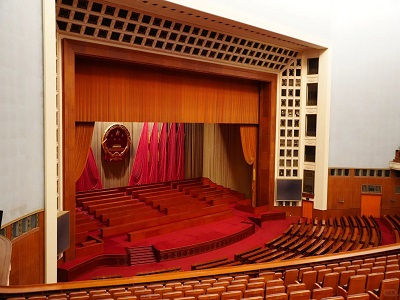
The building is used for major political events, including sessions of the National People's Congress, state banquets, and diplomatic meetings with foreign leaders.
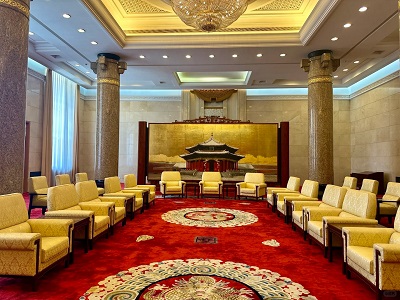
Architecturally, the Great Hall of the People is one of the famous “Ten Great Buildings” of Beijing, a group of monumental structures built in the late 1950s. It is known for its massive scale, symmetrical design, and grand interior halls, each representing different provinces and regions of China.
National Museum of China
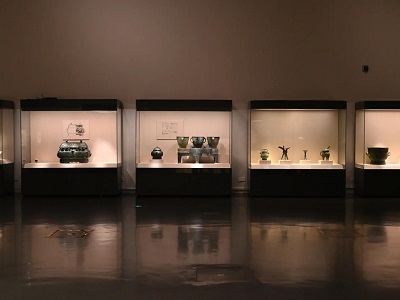
The National Museum of China is located on the eastern side of Tiananmen Square and is one of the largest and most important museums in the world.
It combines the former Museum of Chinese History and Museum of the Chinese Revolution, offering a comprehensive overview of China's long historical development and cultural heritage.
The museum's exhibitions cover a vast timeline, from ancient civilizations and imperial dynasties to modern revolutionary history and contemporary cultural achievements.
For many visitors, the National Museum serves as an ideal extension of a Tiananmen Square visit, providing deeper historical context and a more detailed understanding of China's past and present.
Best Time to Visit Tiananmen Square
Early Morning
Early morning is widely considered the best time to experience Tiananmen Square, especially for first-time visitors to Beijing. The atmosphere is calm, the air is cooler, and the crowds are significantly smaller compared to later in the day.
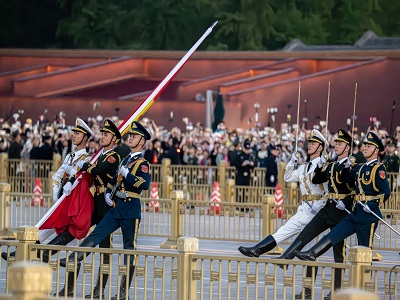
One of the most popular reasons to arrive early is the flag-raising ceremony, which takes place at sunrise and is conducted by the Chinese national honor guard. Watching the flag rise in front of Tiananmen Gate is a memorable and symbolic experience for many travelers.
Early morning is also the best time for photography. The soft natural light highlights the symmetry of the square, the Monument to the People's Heroes, and the iconic Tiananmen Gate without harsh shadows or heavy crowds in the frame.
Daytime
Daytime is the most practical and flexible time to visit Tiananmen Square, especially if you plan to combine it with nearby attractions such as the Forbidden City and the National Museum of China.
During the day, you can clearly observe the full layout of the square, including its central axis and surrounding monumental buildings. The scale of the square becomes more impressive when viewed under full daylight, allowing you to appreciate its architectural and ceremonial design.
This is also the most convenient time for guided tours or self-guided walking routes through central Beijing, as most major cultural sites in the area operate during daytime hours.
Evening
In the evening, Tiananmen Square takes on a more relaxed and atmospheric character. While access and movement may be subject to security arrangements and closing schedules, the surrounding area remains visually striking as the city lights begin to illuminate the skyline.
This time of day is ideal for appreciating the square from a broader urban perspective, especially the contrast between historic architecture and modern Beijing cityscape. The illuminated Tiananmen Gate and nearby government buildings create a dramatic and memorable view.
Evening visits are best planned in advance, as access rules and pedestrian flow may vary depending on official schedules, public events, or national holidays.
Beijing One-Day Tour Route Recommendations
Route 1: Imperial Beijing Classic Route
Tiananmen Square → Tiananmen Gate → Forbidden City → Jingshan Park → Beihai Park
This is the most iconic cultural route in Beijing, covering the city's central axis and imperial heritage
Perfect for first-time visitors who want to understand China's royal history and architecture
Includes panoramic views of the Forbidden City from Jingshan Park
Route 2: Modern & Historical Highlights Route
Tiananmen Square → National Museum of China → Qianmen Street → Temple of Heaven
Combines political history, cultural exhibitions, and traditional Beijing street life
Ideal for travelers who want a balance between museums and local atmosphere
Temple of Heaven offers a peaceful contrast to the city center
Route 3: Cultural & Leisure Experience Route
Summer Palace → Olympic Park → 798 Art District → Sanlitun
Showcases Beijing's imperial gardens, modern architecture, contemporary art, and nightlife
Best for travelers interested in photography, modern culture, and relaxed sightseeing
A great way to experience both old and new Beijing in one day
If you prefer a hassle-free experience, we also offer a carefully designed Beijing One-Day Tour including Tiananmen Square, Forbidden City, and other top landmarks, with professional guides and optimized routes to help you make the most of your time in the city.
Tiananmen Square Travel Tips
Security Check Preparation
Expect security checks at all entrances to Tiananmen Square and nearby attractions. Allow extra time for screening, especially during weekends, holidays, and peak travel seasons.
Bring Your Passport
Always carry your passport or valid identification, as it is required for entry, ticket verification, and security checks in the Tiananmen Square area.
Check Opening Hours in Advance
Check official opening hours and access rules before your visit, as they may change during national holidays, state events, or special ceremonies.
Visit Early for a Better Experience
Arrive early in the morning if possible to avoid large crowds, enjoy cooler temperatures, and experience a more relaxed atmosphere around the square.
Be Aware of Temporary Restrictions
Be prepared for restricted access or temporary closures during major political events, national ceremonies, or security-related arrangements.
Follow Photography Rules
Follow all on-site rules regarding photography. Avoid using drones or professional filming equipment unless you have official permission.
Respect Public Space
Do not disrupt public order or block pedestrian flow when taking photos or exploring the square. Keep pathways clear for other visitors.
Wear Comfortable Walking Shoes
Wear comfortable walking shoes, as you will be covering a large open plaza and visiting multiple surrounding landmarks on foot.
Stay Hydrated and Protected from Sun
Bring water and sun protection in summer, as there is very limited shade in the square and temperatures can become quite high.
Dress for the Weather
Dress appropriately for the season, especially in winter when Beijing temperatures can drop significantly and wind conditions may be strong.
Frequently Asked Questions About Tiananmen Square
What is Tiananmen Square?
Tiananmen Square is a large public square in the center of Beijing, China. It is one of the most important landmarks in the country and a symbol of modern China. The square is known for its historical significance, national ceremonies, and surrounding government and cultural buildings.
Where is Tiananmen Square in Beijing?
Tiananmen Square is located in central Beijing, along the city's north–south axis. It sits just south of the Forbidden City, with Tiananmen Gate to the north and Qianmen (Front Gate) area to the south. It is also close to major attractions like the National Museum of China.
When was Tiananmen Square built?
Tiananmen Square has two layers of history. The area dates back to the Ming Dynasty when the imperial city was built. However, the modern open square we see today was mainly formed and expanded in the 1950s, when large-scale construction created its current layout and surrounding buildings.
Why is Tiananmen Square famous?
Tiananmen Square is famous for several reasons: its role in Chinese history, its political importance as a site for national ceremonies, its iconic architecture such as the Monument to the People's Heroes, and its function as the main venue for major state celebrations and public gatherings.
What happened in Tiananmen Square in 1989?
In 1989, Tiananmen Square became the center of large student-led protests calling for political and social reforms. The movement lasted for several weeks and ended in early June when the government used military force to clear the square. The events of June 3–4 remain a highly sensitive and widely discussed part of modern Chinese history.
What is the Tiananmen Massacre?
The term "Tiananmen Massacre" usually refers to the violent crackdown on protesters in and around Tiananmen Square on June 3–4, 1989. It describes the use of military force and the resulting casualties, though exact numbers remain disputed and vary across different sources.
Can tourists visit Tiananmen Square?
Yes, tourists can visit Tiananmen Square, but access is controlled. Visitors typically need to go through security checks and may be required to book in advance or present identification. Opening hours can change during national events or special occasions, so it is important to check official updates before visiting.
How long should I spend at Tiananmen Square?
Most visitors spend about 1–2 hours exploring the square itself. If combined with nearby attractions like the Forbidden City or the National Museum of China, a half-day (3–5 hours) is recommended for a more complete experience.
Is Tiananmen Square near the Forbidden City?
Yes, Tiananmen Square is directly south of the Forbidden City. They are connected along Beijing's central axis, making it very easy to visit both in one trip, often walking from the square through Tiananmen Gate into the Forbidden City.