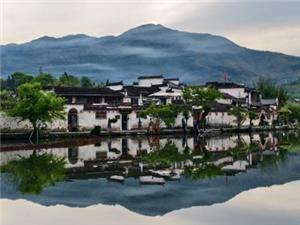
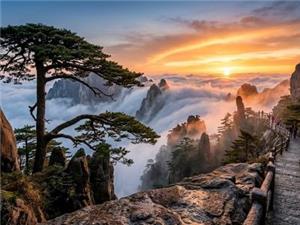
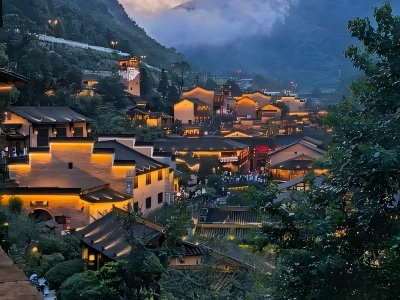
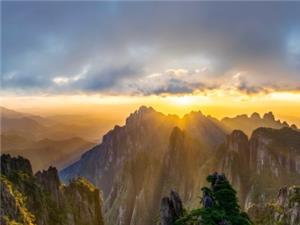
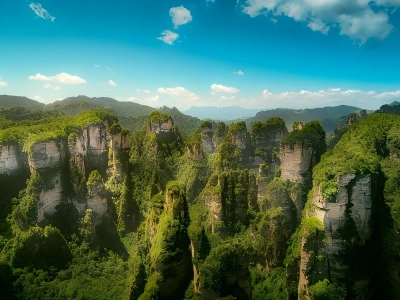
Huangshan is more than a mountain to climb. It is a place where dramatic granite peaks, ancient pine trees, misty valleys, centuries-old Huizhou villages, local food and tea all come together. You can spend one day chasing the sea of clouds and sunrise on Mount Huangshan, then slow down the next day with a walk through Hongcun, a cup of Huangshan Maofeng tea, or a meal of classic Huizhou cuisine.
Whether you are here for the hiking, the photography, the ancient villages, or simply a slower taste of southern Anhui, there is plenty to keep you busy. This guide brings together the best things to do in Huangshan, from the must-see mountain scenery to cultural experiences and quieter places worth adding to your trip.
Make your Huangshan trip easier with our selection of private tours and flexible itineraries. From Mount Huangshan and its famous peaks to Hongcun, Xidi and Huizhou culture, there's an option for different travel styles and schedules.
Quick Answer: What Are the Best Things to Do in Huangshan?
| Recommended Activity | What to Expect | Best For |
|---|
Hike Mount Huangshan | Iconic peaks, ancient pines, strange rocks and scenic trails | Hikers & first-time visitors |
Watch the Sunrise & Sea of Clouds | Mountain views, morning mist and changing light | Photographers & couples |
Visit Hongcun & Xidi | Historic houses, traditional architecture and village life | Culture lovers & photographers |
Try Huizhou Food & Local Tea | Regional dishes, Huangshan Maofeng and tea tasting | Foodies & tea lovers |
Explore the Xin'an River & Qiyun Mountain | Riverside scenery, countryside and Taoist sites | Families & slow travelers |
Discover Huizhou Culture & History | Museums, traditional crafts and local heritage | History & culture lovers |
Top Things to Do in Huangshan
Hike Mount Huangshan and Explore Its Famous Peaks
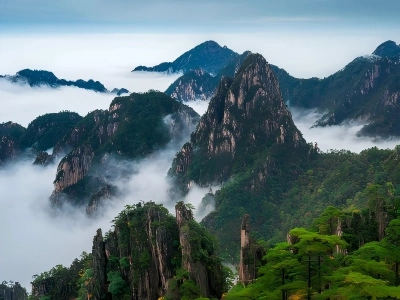
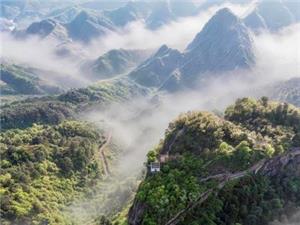
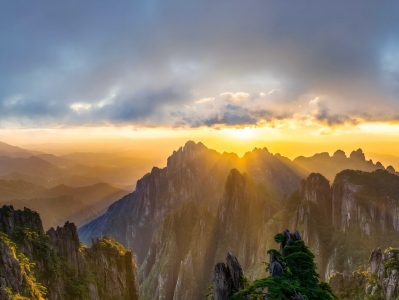
Mount Huangshan is the highlight of any trip to the area, combining dramatic granite peaks, ancient pine trees, unusual rock formations and mountain trails with constantly changing views. You can take a cable car to the higher areas and spend your time walking between the main peaks and viewpoints, or choose longer trails if you want a more active hike.
For a first visit, you don't need to cover the entire mountain. A well-planned route can take in the most famous peaks, the Four Great Wonders, sunrise viewpoints and, if you have enough time and energy, the West Sea Grand Canyon. Staying overnight is especially worthwhile if you want to see the sunrise or have more time to explore without rushing.
Explore Huangshan's Famous Peaks
Huangshan has many peaks, but a few stand out for their scenery, hiking routes and the views they offer along the way. You don't need to visit every one of them to enjoy the mountain. These are the main peaks you'll come across on a classic Huangshan hike, and knowing a little about each can help you decide which ones you want to include in your route.
Lotus Peak (Lianhua Feng)
At around 1,864 meters, Lotus Peak is the highest peak in Huangshan. The summit takes its name from its lotus-like shape, and the trail becomes steeper as you get closer to the top. On a clear day, you can look across a wide stretch of the surrounding mountains. It is one of the highlights of the classic Huangshan route when the peak is open.
Bright Summit (Guangming Ding)
Bright Summit, at about 1,860 meters, is one of the most popular places to take in the mountain scenery. The summit is relatively open, so you get wide views of the surrounding peaks and valleys. It is also a favorite spot for sunrise and the sea of clouds, and its location makes it a convenient stop on many hiking routes.
Celestial Capital Peak (Tiandu Feng)
If you enjoy a more challenging climb, Celestial Capital Peak is the one to look out for. The trail is steep in places, with narrow sections and the famous Heavenly Ladder adding to the challenge. The climb is more demanding than some of the other major peaks, but it also gives you a different perspective of Huangshan's granite landscape. Check the current opening status before setting out, as access can vary.
Beginning-to-Believe Peak (Shixin Feng)
Beginning-to-Believe Peak is a good place to see some of Huangshan's characteristic pine trees growing among the granite rocks. It also has open views toward several surrounding peaks. The name comes from the old saying that visitors only begin to believe how beautiful Huangshan is after seeing it for themselves. It is an easy addition to many classic routes, so you won't need to make a special detour just to visit it.
Personally, if this is your first Huangshan hike, I'd focus on Bright Summit and Beginning-to-Believe Peak, then add Lotus Peak or Celestial Capital Peak depending on the route and your fitness level.
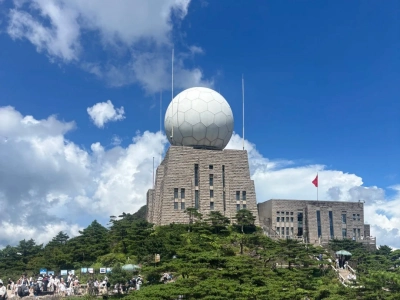
Experience Huangshan's Four Great Wonders
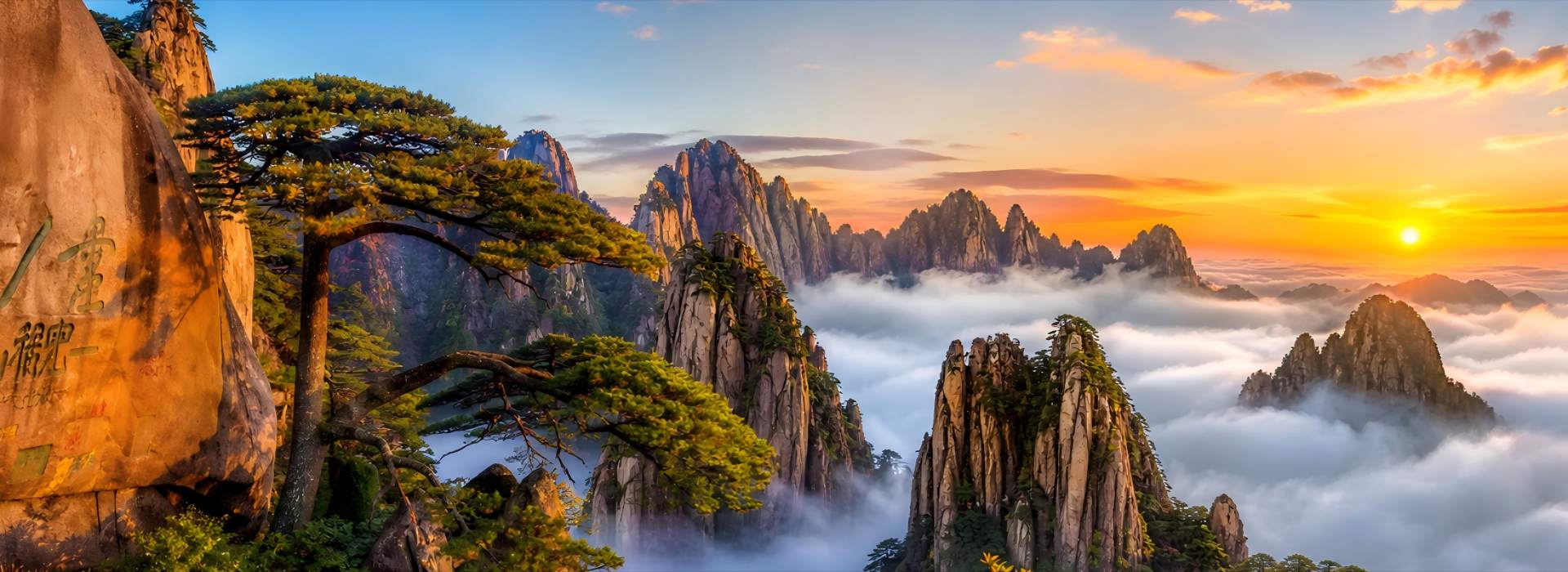
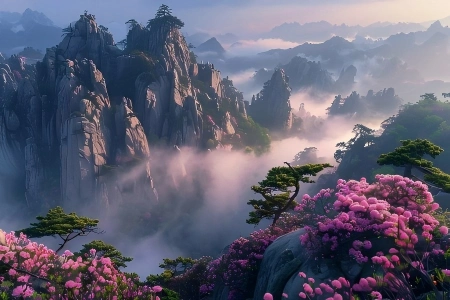
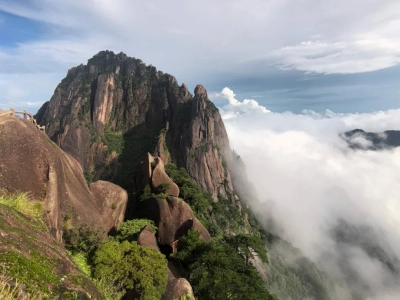
The Four Great Wonders of Huangshan — strange pines, unusual rocks, the sea of clouds and hot springs — are what give the mountain much of its distinctive character. You'll come across several of them during a normal hike, but each is worth paying attention to rather than simply treating them as background scenery.
Strange Pines
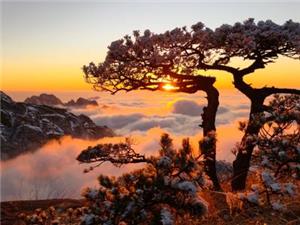
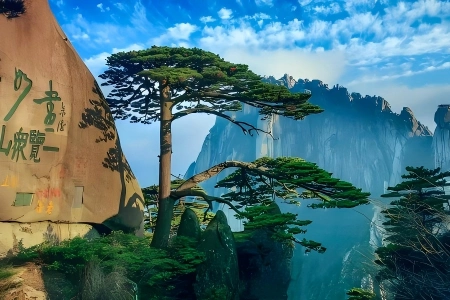
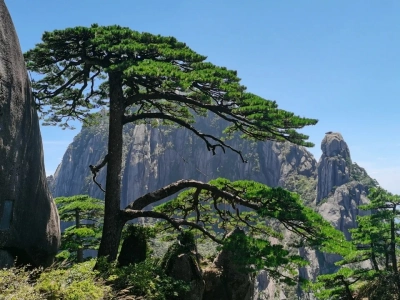
Huangshan's pine trees are famous for growing in places that seem almost impossible, often rooted in cracks between granite rocks or along steep cliffs. Their unusual shapes are the result of the mountain environment and centuries of growth. The Guest-Greeting Pine near Yuping Scenic Area is the best-known example, but you'll find plenty of other old pines along the trails. Some are named for their shapes or positions, while others are simply beautiful trees you'll notice as you walk.
Unusual Rocks
The granite landscape of Huangshan is filled with rocks and formations in all kinds of shapes. Some have been given names based on what they are thought to resemble, including Flying-over Rock and Monkey Watching the Sea. You may find the names easier to understand once you see the formations yourself. Fog and changing light can also make the same rock look quite different at different times of day, which is part of the fun.
Sea of Clouds
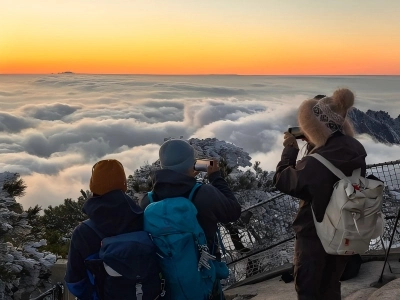
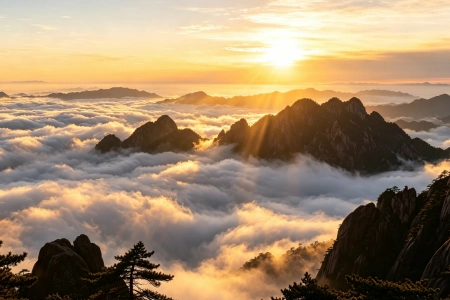
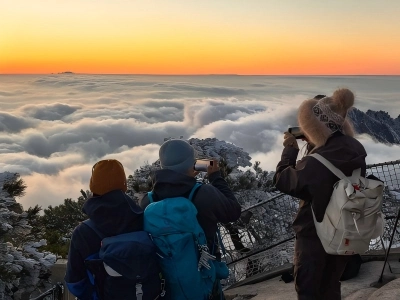
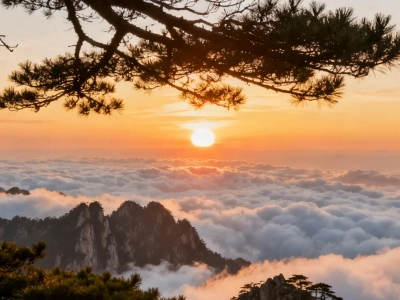
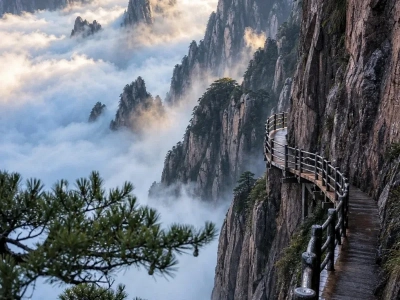
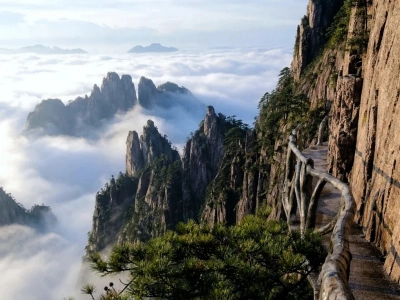
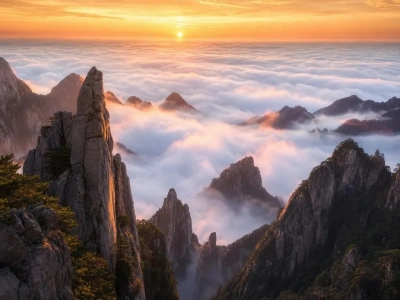
The Sea of Clouds is one of the most sought-after sights on Huangshan. When clouds settle below the higher peaks, the surrounding mountains can appear to rise above a layer of white mist. Bright Summit, Lion Peak and Beginning-to-Believe Peak are among the popular areas for seeing this phenomenon. It is completely weather-dependent, though, so don't be disappointed if the mountain is clear or cloudy on your visit. The conditions can change quickly, and that's one reason an overnight stay gives you a better chance of seeing it.
Hot Springs
The Huangshan Hot Springs are located at the foot of the mountain and offer an easy way to relax after hiking. They have long been associated with Huangshan and are traditionally counted among the mountain's Four Great Wonders. If you're staying overnight or have a little extra time, soaking in the hot springs can be a nice change of pace after a day spent climbing stairs and walking mountain trails.
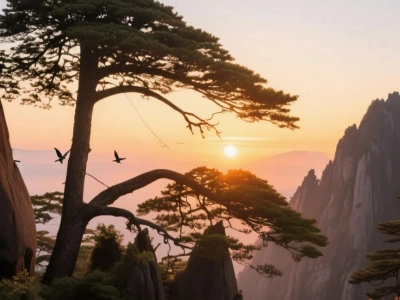
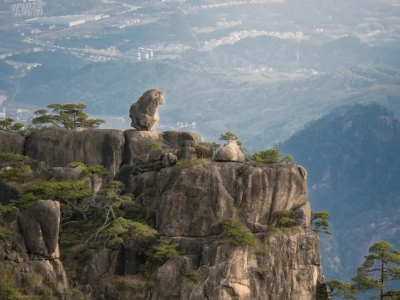
Watch the Sunrise from Huangshan
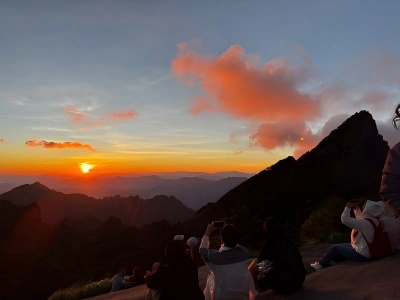
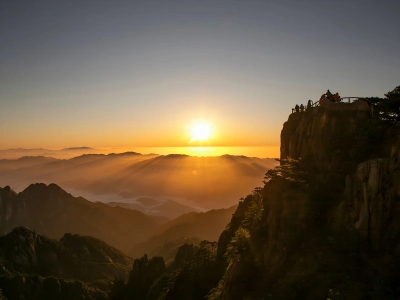
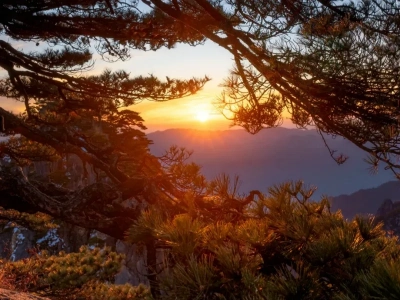
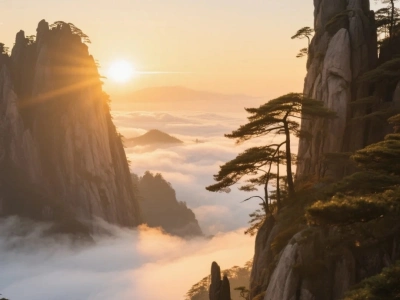
Sunrise is one of the most popular things to do on Huangshan, especially if you stay overnight on the mountain. Depending on where you're staying, Bright Summit, Bai'e Peak, Lion Peak and Beginning-to-Believe Peak are among the places you may head to before dawn.
You'll need to leave early and walk in the dark, so warm layers and a flashlight are useful, particularly outside the warmer months. There is never a guarantee of clear skies, but when the weather cooperates, watching the first light spread across the peaks and clouds can be one of the best moments of the trip. If sunrise is important to you, staying on the mountain is much more convenient than trying to arrive from the town below that morning.
Hike the West Sea Grand Canyon
For travelers who want more than the classic sightseeing route, the West Sea Grand Canyon is one of the best places to add some serious hiking to the trip. The trail winds through steep granite cliffs and deep valleys, with viewpoints that feel more rugged and remote than the main scenic areas.
The route is considerably more demanding than simply walking between the major viewpoints, so it is better suited to travelers with good fitness and enough time. If you're visiting Huangshan for just one day, don't feel that you have to squeeze it in. But with an overnight stay and a little extra time, the West Sea Grand Canyon can add a completely different side to the mountain.
Choose a Hiking Route That Fits Your Trip
You don't need to turn Huangshan into a race. For a one-day visit, focus on the main scenic areas and a few famous peaks rather than trying to cover the whole mountain. If you stay one night, you'll have more time to walk at a comfortable pace and catch sunrise the next morning. Experienced hikers with more time can consider adding the West Sea Grand Canyon.
Cable cars can also make a big difference. They allow you to skip some of the longer uphill sections and save your energy for the trails and viewpoints that interest you most. The best Huangshan hike isn't necessarily the longest one — it's the one that gives you enough time to actually enjoy the mountain.
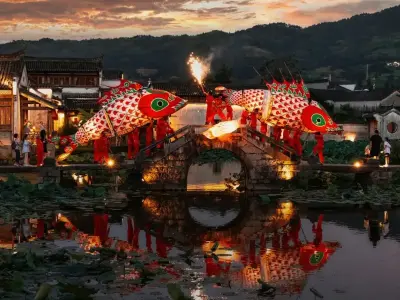
Explore Huizhou Ancient Villages and Historic Towns
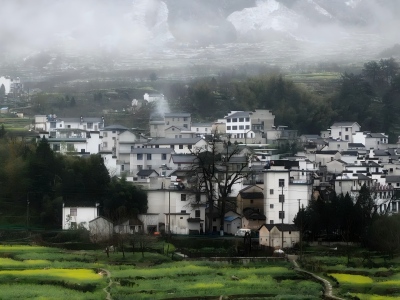
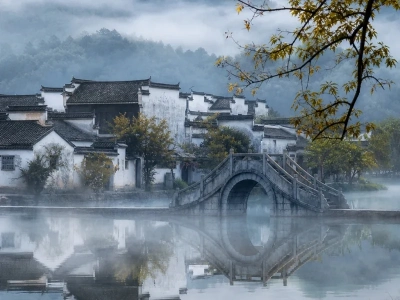
Once you've had enough of the mountain trails, head into the villages and towns around Huangshan to see a very different side of the region. This area was historically part of Huizhou, and its distinctive white-walled houses, dark tiled roofs, ancestral halls, narrow lanes and waterways are still well preserved in many places. Walking through these old settlements is less about ticking off individual attractions and more about seeing how traditional Huizhou communities were built and lived.
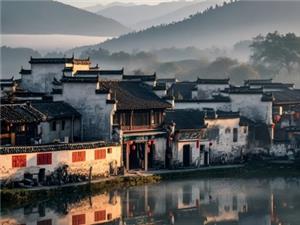
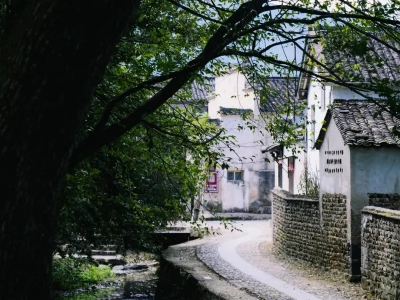
The area around Huangshan is home to some of the best-preserved examples of traditional Huizhou architecture. Whitewashed walls, dark tiled roofs, ancestral halls, carved wooden details, stone lanes and small waterways are common features, but each village has its own layout and character. Walking through these historic communities gives you a closer look at the architecture, customs and everyday life that developed in southern Anhui over hundreds of years.
Hongcun
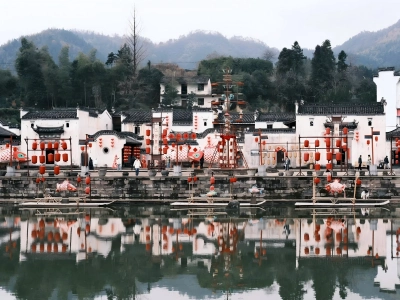
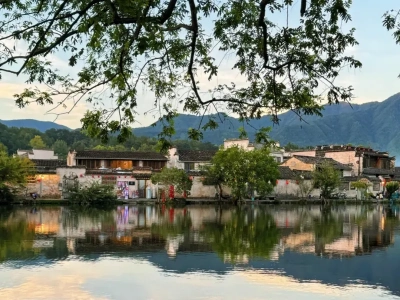
Hongcun is one of the most recognizable ancient villages in Huangshan, known for its carefully planned water system and traditional Huizhou houses. South Lake and Moon Pond are the village's best-known landmarks, with waterways running through the settlement and past historic residences. The reflections of the white walls and dark roofs on the water are especially attractive in the early morning.
Take time to walk through the narrow lanes and visit some of the old residences and ancestral halls. Look closely at the carved wooden screens, stone details and decorative doorways, which reveal the wealth and craftsmanship of historic Huizhou families. The village is compact enough to explore on foot, so you can wander without following a strict route.
Xidi
Xidi is a historic Huizhou village filled with old residences, ancestral halls, narrow lanes and richly decorated doorways. Many of the buildings date back to the Ming and Qing dynasties, and their interiors preserve details such as wooden carvings, decorative beams and traditional courtyards.
As you walk through Xidi, pay attention to the small architectural details rather than only the main streets. The village's stone lanes connect residential buildings, ancestral halls and old public spaces, giving you a sense of how the community was organized in the past. It is also worth taking your time around the old houses, where the decorative carvings tell stories about family history, social status and traditional values.
Chengkan
Chengkan is a historic village with a history of more than 1,800 years and a strong connection to traditional Chinese ideas of settlement and feng shui. Its name is often associated with the concept of "Eight Trigrams", and the layout of the village reflects careful planning around water, buildings and surrounding mountains.
The village contains a large number of preserved Huizhou residences, ancestral halls and stone lanes. One of the highlights is Luo Dongshu Ancestral Hall, an impressive example of traditional Huizhou architecture. Walking through Chengkan, you'll find courtyards, bridges, waterways and old homes closely connected to one another, making the village itself the main attraction.
Tangmo
Tangmo is a historic Huizhou village built around water, with canals, bridges, gardens and traditional residences forming an important part of its landscape. The village is known for its water street, where waterways run alongside old buildings and create a pleasant walking environment.
The Tangmo Ancient Garden is another notable feature, combining traditional landscaping with ponds, bridges and pavilions. As you explore the village, you'll see ancestral halls, old homes and small stone bridges woven into the surrounding countryside. The combination of architecture, water and gardens makes Tangmo a good place to slow down and explore on foot.
Bishan Village
Bishan Village sits in a rural setting surrounded by farmland and mountains, with traditional Huizhou houses forming the core of the village. In recent years, some of these old buildings have been converted into cafés, bookstores, studios and creative spaces, bringing new life to the historic architecture.
A walk through Bishan gives you a glimpse of everyday rural scenery as well as the preserved village buildings. You can explore old lanes, stop at a local café, browse creative spaces or simply enjoy the views of the surrounding countryside. It is a good place to spend a relaxed afternoon without planning every minute of your visit.
Tunxi Old Street
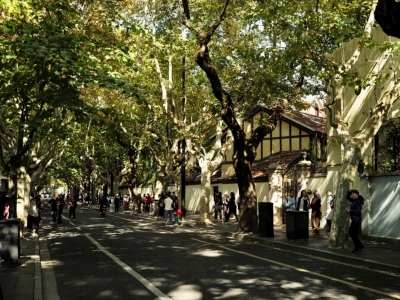
Tunxi Old Street is located in the center of Huangshan City and has been an important commercial area for centuries. The street is lined with traditional Huizhou-style buildings featuring white walls, dark roofs and wooden fa?ades. Many of the old buildings now house tea shops, restaurants, snack stores and traditional handicraft shops.
The street is particularly enjoyable in the late afternoon and evening, when shops are open and the area becomes livelier. Try some local snacks, browse Huangshan tea and traditional products, or simply walk along the old stone-paved streets and look at the architecture. It is also a convenient place to learn more about local food and shopping while staying in Huangshan.
How to Explore the Ancient Villages
You don't need to rush through every village. A good visit usually means walking the old lanes, entering a few historic residences, looking at the architectural details and leaving some time to sit down and observe the village around you. Hongcun and Xidi are the main choices for a first introduction to Huizhou architecture, while Chengkan, Tangmo and Bishan offer more places to explore if you have additional time.
If you're planning a longer Huangshan trip, you can also combine a village visit with a tea plantation or local food experience, making the day less about sightseeing from one attraction to the next and more about experiencing the wider Huizhou landscape and culture.
Taste Huizhou Cuisine and Experience Huangshan Tea
Food and tea are an important part of experiencing Huangshan beyond its mountains and ancient villages. Huizhou cuisine is known for its use of local ingredients, rich flavors and traditional cooking methods, while Huangshan is famous for tea production, especially Huangshan Maofeng. Leave some time in your itinerary to eat local dishes, visit a tea plantation or simply sit down for a proper tea tasting.
Taste Huizhou Cuisine
Huizhou cuisine, or Hui cuisine, is one of China's major regional culinary traditions. Local cooking makes good use of ingredients from the surrounding mountains and countryside, including bamboo shoots, mushrooms, tofu, mountain vegetables and freshwater fish. Traditional methods such as braising, stewing and steaming are commonly used, creating dishes with rich but balanced flavors.
Try Stinky Mandarin Fish
Stinky Mandarin Fish (Chou Guiyu) is probably the dish most closely associated with Huizhou cuisine. The fish is fermented before cooking, which gives it a strong aroma but a much milder flavor once prepared. The flesh remains tender, while the sauce is usually savory and rich.
Don't let the name put you off. The fermentation is part of the traditional preparation, and trying the dish is one of the more distinctive food experiences in Huangshan. Local restaurants often serve it with rice and other Huizhou dishes, making it easy to include as part of a shared meal.
Sample Hairy Tofu
Hairy tofu (Mao Doufu) is another traditional Huizhou specialty with an unusual appearance. Tofu is fermented until a layer of white mold develops on the surface, then it is usually pan-fried or cooked with a savory sauce.
The texture becomes softer and richer through fermentation, while the outside develops a slightly crisp layer when fried. It is commonly found in local restaurants and food streets, so it is an easy dish to try if you want to sample something particularly local.
Taste Huangshan Shaobing and Local Snacks
For something simpler, look for Huangshan Shaobing, a small sesame-topped pastry traditionally filled with dried vegetables and pork. It is crisp on the outside, savory inside and easy to eat while exploring Tunxi Old Street or the surrounding towns. You can also find other local snacks made with bamboo shoots, tofu and mountain vegetables. These ingredients appear frequently in Huizhou cooking because of the region's mountainous environment and agricultural traditions.
Enjoy a Traditional Huizhou Meal
For a fuller introduction to local food, order several Huizhou dishes to share. Along with the better-known specialties, look for seasonal dishes featuring bamboo shoots, mountain vegetables, tofu and local meats. Restaurants in Huangshan City, Tunxi and the surrounding villages are good places to try regional cooking, and asking for the restaurant's local specialties is often the easiest way to discover something beyond the standard menu.


Experience Huangshan Tea
Huangshan has a long tea-growing tradition, and Huangshan Maofeng is the tea you are most likely to encounter. The green tea is produced in the mountain areas around Huangshan and is known for its fresh aroma, delicate leaves and clean taste. Tea is closely connected with the local landscape, agriculture and everyday life, making a tea experience a natural addition to a Huangshan trip.
Visit a Huangshan Tea Plantation
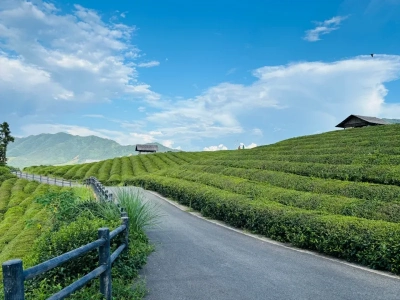
Tea plantations spread across the hills around Huangshan, often surrounded by forests, villages and farmland. Walking through the tea fields gives you a chance to see how the leaves are grown and harvested, while local farmers can explain the picking and processing methods. Spring, particularly March to May, is generally the most interesting period for seeing fresh tea production, although the exact timing varies with weather and altitude.
Taste Huangshan Maofeng
A proper Huangshan Maofeng tea tasting is worth doing even if you're not a serious tea drinker. You can taste freshly brewed tea, learn how different grades are produced and see how brewing temperature and timing affect the flavor. If you're visiting a tea plantation, the tasting can easily be combined with a walk through the fields.
Learn About Huizhou Tea Culture
For a deeper look at the region's tea traditions, consider visiting the Xie Yuda Tea Culture Museum or another local tea center. These experiences can introduce you to the history of Huangshan tea, traditional tea-making methods and the role tea has played in local life. You can also keep it simple: find a traditional tea shop, sit down with a local tea host and spend half an hour tasting different teas. After a busy day of sightseeing, this can be one of the easiest ways to slow down and enjoy Huangshan at a more relaxed pace.

Explore the Xin'an River and Huangshan's Countryside
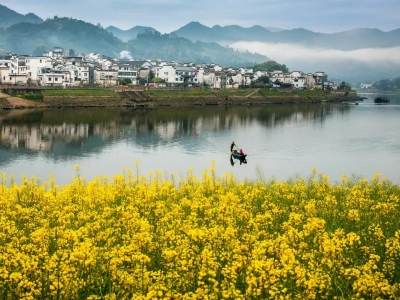
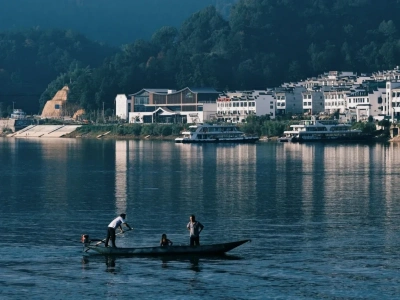
The Xin'an River runs through the historic Huizhou region and has shaped the landscape and communities around Huangshan for centuries. With green hills, traditional villages, farmland and waterways along its banks, the river offers a more relaxed way to experience the countryside. It is a good choice when you want to spend some time outdoors without another demanding mountain hike.
Take in the Xin'an River Landscape
The Xin'an River Landscape Gallery is one of the best-known ways to experience the river scenery. The route follows the river through a landscape of wooded hills, small villages, farmland and traditional houses. Depending on the season, you may see mist over the water, spring greenery, autumn colors or local farming activity along the river.
The scenery is particularly enjoyable from the water, where you can take in the surrounding hills without constantly walking between viewpoints. Bring a camera if you enjoy landscape photography, as the combination of river, mountains and villages creates plenty of natural photo opportunities.
Explore Qiyun Mountain
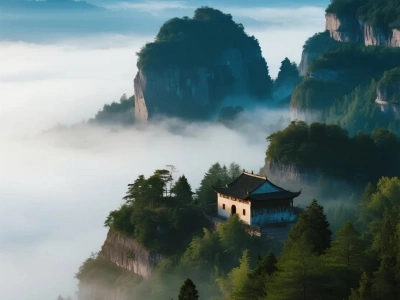
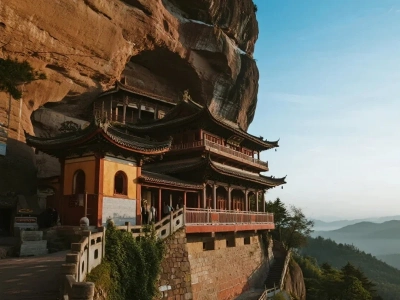
If you have an extra day around Huangshan, Qiyun Mountain is well worth considering for its combination of mountain scenery, Taoist heritage and historic sites. Located in Xiuning County, the mountain is one of China's well-known Taoist mountains and has been an important religious site for centuries. Its landscape is shaped by reddish Danxia rock formations, cliffs, caves and forested slopes.
Visit the Taoist Sites
Qiyun Mountain is home to a number of Taoist temples, shrines and historic buildings scattered along the mountain trails. Qiyun Temple is one of the main religious sites, while smaller temples and stone structures appear along the route. Walking between them gives you a sense of how the mountain developed as a place of Taoist practice rather than simply a scenic attraction.
See the Danxia Rock Formations
The mountain's reddish sandstone formations create a landscape quite different from the granite scenery of Huangshan. Cliffs, caves and unusual rock shapes appear along the walking routes, with vegetation growing around and between the rocks. Yuehua Street and the surrounding scenic areas are good places to see the characteristic landscape while exploring the mountain.
Look for Ancient Inscriptions
One of the interesting details on Qiyun Mountain is its collection of cliff inscriptions and stone carvings. Some were left by religious figures, scholars and visitors over the centuries and remain visible on the rock faces. They provide a direct connection to the mountain's history and make the hiking route more than just a walk through the scenery.
Enjoy the View from Yuehua Street
Yuehua Street is one of the best-known areas on Qiyun Mountain, with traditional buildings, Taoist sites and mountain views gathered along the route. From the higher sections, you can look across the surrounding countryside, villages and hills. Take some time to explore the small temples and stone paths rather than treating the area as simply a viewpoint.
Take the Cable Car or Hike Up
You can reach the main scenic area by cable car, which saves time and energy, or hike along the mountain trails if you prefer a more active visit. The cable car is useful if you want to focus on the cultural sites and viewpoints higher up, while walking gives you more time to experience the forest, rocks and smaller historic features along the way.
Qiyun Mountain is best suited to travelers who have enough time to explore beyond the main Huangshan attractions. Allowing several hours for the mountain gives you enough time to see the main Taoist sites, enjoy the landscape and walk at a comfortable pace.
Discover Huizhou Culture and History
Huangshan sits in the heart of historic Huizhou, a region in southern Anhui with a distinctive tradition of architecture, education, commerce, family clans and craftsmanship. Its cultural identity can be seen in the ancestral halls and residences of the ancient villages, but there is more to discover beyond the old buildings. Museums and cultural performances offer a closer look at the people, skills and traditions behind Huizhou's heritage.
Visit the Huangshan Museum
The Huangshan Museum is a useful starting point for understanding the local area. Its collections cover the history, culture and development of Huangshan and the wider Huizhou region, with exhibits related to traditional architecture, local customs, art and historical objects. A museum visit is particularly useful before or after exploring the ancient villages, as it gives you more context for the ancestral halls, residential buildings and cultural traditions you'll encounter around Huangshan.
Explore the Huizhou Culture Museum
The Huizhou Culture Museum focuses more specifically on the history and traditions of Huizhou. Exhibits introduce aspects of local architecture, education, commerce, clan culture and traditional lifestyles, helping explain why the region developed such a distinctive identity. If you're interested in the history behind the ancient villages, this is a worthwhile stop. Instead of only looking at old buildings, you'll gain a better understanding of the people and social traditions that shaped them.
See Traditional Craftsmanship at the Huizhou Sculpture Museum
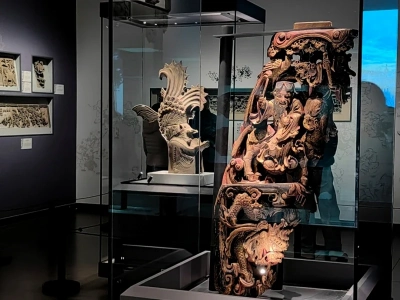
Traditional Huizhou carving is an important part of the region's architectural heritage. Wood, stone and brick carvings can be found throughout old residences and ancestral halls, often featuring decorative patterns, plants, animals, figures and traditional stories. The Huizhou Sculpture Museum offers a closer look at these techniques and the craftsmanship behind them. It is a good place to slow down and examine the details that can be easy to overlook when you're walking quickly through an ancient village.
Learn About Tea at the Xie Yuda Tea Culture Museum
Tea has played an important role in the history and economy of the Huangshan region. The Xie Yuda Tea Culture Museum provides an opportunity to learn more about Huangshan's tea traditions, production methods and the history behind local tea brands. The visit works particularly well alongside a tea plantation or tasting experience. After seeing how tea is grown and processed, the museum can help connect the modern tea industry with the longer tea culture of the region.
Watch a Huizhou Cultural Performance
Huizhou's traditions are also presented through local opera, folk music, dance and large-scale cultural performances. Some shows draw on stories connected with Huizhou merchants, traditional villages and local customs, combining historical themes with music, costumes and stage design.
A performance can be a good evening activity after a day of sightseeing, especially if you're interested in seeing how local history is interpreted for a modern audience. Since performances vary by season and venue, check the current schedule before planning your evening around one.
What Makes Huizhou Culture Worth Exploring?
The most interesting thing about Huizhou culture is how closely its different traditions connect. Merchant wealth helped shape elaborate houses and ancestral halls; education and clan traditions influenced village life; carving decorated the buildings; and tea became an important part of the region's economy and daily culture. Once you understand these connections, the architecture and villages around Huangshan become much easier to appreciate.

Best Things to Do in Huangshan by Travel Style
Huangshan can be a very active trip or a much slower one, depending on how you like to travel. Some itineraries are built around long hiking days and early mornings, while others leave more time for food, villages, tea and local culture. Choosing your travel style first makes it easier to decide what deserves your time.
For First-Time Visitors
Keep your first trip simple and focus on the core Huangshan experience rather than trying to cover the whole region. Give Mount Huangshan the largest share of your time, then add a Huizhou village and a local food or tea experience. This combination gives you a good introduction to both the natural landscape and the culture of southern Anhui.
For Hikers
Give yourself enough time to walk rather than relying entirely on viewpoints and cable cars. Two days on the mountain is a comfortable choice for travelers who enjoy hiking, while stronger hikers can add longer routes. Start early, keep your pace steady and avoid planning another major activity immediately after a full day on the trails.
For Photographers
Allow more time than a standard sightseeing itinerary. Mountain weather and light change quickly, so a flexible schedule gives you more opportunities for good conditions. Sunrise deserves an early start, while ancient villages are best explored when you have time to wait for quieter streets and better light rather than simply passing through.
For Couples
Choose a slower pace with fewer major stops. An overnight stay on the mountain, a relaxed village walk, a local dinner and a tea experience create a natural rhythm without making the trip feel like a checklist. Leave some free time in the schedule for views, cafés or simply wandering around without a fixed destination.
For Families
Build the itinerary around shorter activity periods and plenty of breaks. A full day of mountain stairs can be tiring, especially for younger children, so balance the more demanding parts of the trip with villages, food experiences and easier outdoor activities. Keeping the schedule flexible also makes it easier to adjust when weather or energy levels change.
For Food and Tea Lovers
Give local food and tea their own space in the itinerary. Plan meals around Huizhou specialties, then use part of a day for a tea plantation, tasting or tea culture experience. This style of trip works best without rushing from one attraction to another, since eating and tea are experiences to enjoy rather than activities to check off.
For Slow Travelers
Resist the temptation to add another attraction every time you have a free afternoon. Choose a few places and stay longer — walk through an old village, stop for lunch, sit down for tea or spend an evening exploring Tunxi. Three or four days gives this style of trip enough breathing room to enjoy Huangshan without constantly packing and unpacking your schedule.
For Culture Seekers
Spend more time looking beyond the famous mountain scenery. Build your days around Huizhou architecture, museums, traditional crafts, tea culture, local food and cultural performances. This approach works especially well for travelers who want to understand why the villages, houses and traditions around Huangshan look and feel the way they do.
For Repeat Visitors
Use your second trip to explore the region at a deeper level instead of repeating the same highlights. Add Qiyun Mountain, lesser-known Huizhou villages, the Xin'an River or local cultural sites, and give yourself more time for experiences that were easy to overlook on a first visit. A repeat trip is also a good opportunity to slow down and explore one part of the region properly.

Best Time to Visit Huangshan
Huangshan is a year-round destination, but the experience changes significantly with the season. Spring and autumn are generally the most comfortable periods for hiking, while summer brings greener landscapes and a higher chance of rain and cloud formations. Winter offers a quieter mountain and occasional snow-covered scenery, but conditions can be colder and some trails or facilities may operate differently.
Spring: Fresh Greenery and Tea Season
March to May brings mild temperatures, fresh greenery and the beginning of the tea season around Huangshan. The mountain trails become increasingly green, while the surrounding villages and countryside are also at their best for outdoor exploration.
Spring is a particularly interesting time for tea lovers because Huangshan Maofeng is harvested during this period. A visit to a tea-growing area can be combined with village sightseeing or a countryside walk.
Summer: Green Mountains and Dramatic Weather
June to August is the greenest period on Huangshan. Vegetation is dense, and warm, humid weather can produce mist and clouds around the peaks. Rain is more common, so waterproof clothing and shoes are important for hiking.
Summer is also a popular travel period, especially around school holidays. Start mountain hikes early in the day to avoid the strongest heat and allow more time in case rain slows down the route.
Autumn: Clear Views and Comfortable Hiking
September to November is one of the most comfortable periods for exploring Huangshan. Temperatures are generally pleasant for hiking, while autumn colors gradually appear across the mountain and surrounding countryside.
The combination of comfortable hiking conditions, changing foliage and clearer mountain views makes autumn a popular time to visit. Weekends and public holidays can be busy, so booking accommodation and transportation in advance is sensible.
Winter: Rime-Covered Pines and Snowy Peaks
December to February brings some of Huangshan's most distinctive winter scenery. When temperatures drop and moisture freezes on the mountain, rime ice forms on the famous Huangshan pines, rocks and railings, coating them in white and creating the delicate winter landscape known as rime scenery (雾凇).
The effect is especially striking when the rime-covered pines stand against the granite peaks and clouds. After snowfall, the scenery becomes even more dramatic, with white-covered ridges, frozen trees and mist creating constantly changing views along the trails. Winter is also one of the quieter periods on the mountain, making it easier to enjoy the scenery at a slower pace. The trade-off is colder weather and potentially icy paths, so warm layers, waterproof hiking shoes and good traction are essential. Check the latest weather, trail conditions and cable car operations before heading up, as winter conditions can affect access to some areas.
When Are the Best Conditions for Sunrise and the Sea of Clouds?
Both sunrise and the Sea of Clouds depend heavily on weather conditions. Staying overnight on Huangshan gives you the best chance to see them, especially when the weather is changing and moisture gathers around the peaks.
For sunrise, Bright Summit, Bai'e Peak and Lion Peak are popular viewing spots. The Sea of Clouds is often seen around Bright Summit, Beginning-to-Believe Peak and the West Sea area. Check the forecast the night before and keep some flexibility in your schedule—the mountain weather can change quickly.
How Many Days Do You Need in Huangshan?
Huangshan can be a quick mountain escape or part of a much longer China journey. One day is enough for the main mountain highlights, while two to four days gives you time to experience Mount Huangshan alongside Huizhou villages, local food, tea and culture. With five days or more, you can explore southern Anhui at a slower pace or connect Huangshan with nearby destinations across East China. For a longer China trip, Huangshan also makes a natural stop between major cities and other regional highlights.
How to Get to Huangshan
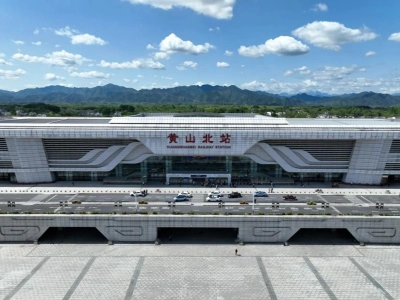
Huangshan is well connected by high-speed rail, flights and road transfers, with high-speed trains offering the most convenient connections and flights providing another option for longer-distance travel. The important thing to remember is that Huangshan North Railway Station, Tunxi and the Huangshan Scenic Area are in different locations, so your journey does not end when you arrive at the train station or airport. Planning the final transfer in advance makes the trip much smoother.
By High-Speed Train
The Huangshan North Railway Station is the main high-speed rail hub for the area. Trains connect Huangshan with cities including Shanghai, Hangzhou, Nanjing, Beijing and Guangzhou, making rail one of the easiest options for combining Huangshan with other destinations. From Huangshan North, you can continue to Huangshan City, Tunxi Old Street or the Huangshan Scenic Area by local transfer or private car.
By Flight
Huangshan Tunxi International Airport serves the city and is convenient for travelers coming from farther away. Flight options vary by season, so check the current schedule when planning your trip. The airport is in Tunxi, making it particularly convenient for travelers staying in Huangshan City before heading to the mountain. But flight routes and schedules are more limited than high-speed trains.
From Huangshan City to the Mountain
Huangshan Scenic Area is outside the city center. From Tunxi, allow roughly 1–1.5 hours to reach the mountain area by road, depending on traffic. Private transfers are the most convenient option when traveling with luggage or combining Huangshan with Hongcun, Xidi or other nearby villages. Public buses are also available for travelers who prefer a lower-cost option.
From Hangzhou or Shanghai
For travelers coming from Hangzhou or Shanghai, the easiest option is to take a high-speed train to Huangshan North Railway Station, then continue by private car to your hotel or the Huangshan Scenic Area. This combination is faster and more comfortable than traveling the entire journey by road, especially when carrying luggage or traveling with family. A private car also makes it easier to continue directly to Hongcun, Xidi or other Huizhou villages without changing transportation along the way.

Where to Stay in Huangshan
Huangshan has three practical bases: the mountain, Tunxi and the surrounding ancient villages. They serve different purposes, so the right choice depends less on the hotel itself and more on how you want to spend your time. Staying on the mountain is about access to the scenery, Tunxi is about convenience, and the villages are about experiencing Huizhou life at a slower pace.
Stay on Huangshan for Sunrise and Early Hiking
Staying on the mountain makes the most sense when sunrise, the Sea of Clouds or longer hiking routes are high on your list. You can reach the viewpoints on foot in the early morning instead of making the long journey up from the city before dawn.
Mountain hotels are limited, and accommodation costs are usually higher than in Tunxi. Reserve early during weekends, holidays and the busiest travel seasons.
Stay in Tunxi for Easy Access and More Choices
Tunxi is the most convenient base for travelers who want restaurants, shops, transportation and a wider choice of hotels. Tunxi Old Street is also right in the city, making it easy to add an evening walk and local dinner after a day of sightseeing.
It is a particularly practical choice for the beginning or end of your trip, especially when arriving by high-speed train or plane.
Stay in Hongcun for a Village Experience
Staying in Hongcun lets you experience the village after the daytime crowds have left. Early mornings and evenings are quieter, and you have more time to walk around the lanes, explore the traditional houses and enjoy dinner in the village.
Xidi, Chengkan and other Huizhou villages also have guesthouses and boutique hotels for travelers who prefer a more atmospheric countryside stay.
Which Area Should You Choose?
For sunrise and hiking, stay on the mountain.
For transportation and convenience, choose Tunxi.
For ancient village atmosphere, stay in Hongcun or another Huizhou village.
For a longer trip, combining two areas—such as one night on the mountain and another night in Tunxi or Hongcun—often gives you a more complete Huangshan experience.
Practical Tips for Visiting Huangshan
A little preparation goes a long way on a Huangshan trip. The mountain involves long stair sections, changing weather and a fair amount of walking, while the surrounding villages are much easier to explore at a relaxed pace. Keep these practical points in mind before you go.
Book Mountain Tickets and Hotels in Advance
Mount Huangshan can get busy during weekends, public holidays and peak travel seasons. Scenic-area admission, cable car tickets and mountain hotels have limited availability, so booking ahead is a good idea when traveling during busy periods. Mountain accommodation is especially limited compared with hotels in Tunxi, so don't leave it until the last minute if you plan to stay overnight.
Check the Weather Before Hiking
Weather can change quickly on the mountain. Rain, fog, strong wind and temperature drops can affect visibility and trail conditions, while winter brings snow and ice. Check the forecast shortly before your visit and confirm current scenic-area and cable car conditions. Keep your itinerary flexible rather than planning around one specific viewpoint.
Prepare for Plenty of Stairs
Huangshan is not a flat sightseeing destination. Even with the cable cars, you'll still encounter long stairways, steep sections and uneven paths. Good walking shoes are essential. If you're not used to hiking, choose a shorter route and allow plenty of time instead of trying to cover every scenic area in one day.
Pack Light but Bring the Essentials
A small backpack is usually enough. Bring water, snacks, sunscreen, a rain jacket, extra layers and basic personal supplies. Mountain temperatures can be noticeably cooler than in Tunxi, particularly early in the morning and after sunset. There are shops and restaurants on the mountain, but prices are generally higher than in the city.
Allow Extra Time for Cable Cars and Transfers
Your journey involves more than simply reaching the mountain entrance. Depending on your route, you'll need to allow time for the scenic-area shuttle bus, cable car and hiking sections. During busy periods, queues can add significant time, so avoid scheduling another major attraction immediately after leaving the mountain.
Don't Overpack Your Itinerary
Huangshan rewards a slower pace. Give yourself time to stop at viewpoints, take photos and adjust your route around weather conditions. Trying to see every famous spot in one day can turn an enjoyable hike into a race.
For most visitors, choosing a sensible route and enjoying the scenery is more worthwhile than checking every attraction off a list.
Frequently Asked Questions About Huangshan
How much walking is involved at Huangshan?
Even with the cable cars, expect several hours of walking once you're on the mountain. Most scenic routes use stone steps rather than flat paths, and some viewpoints require steep climbs. A small backpack and good walking shoes make a noticeable difference.
Can I visit Huangshan with young children or older family members?
Yes, but the route should be planned around the group's fitness level. Cable cars reduce the amount of uphill walking, while shorter scenic routes are easier to manage than long trails such as the West Sea Grand Canyon. Build in regular breaks and avoid trying to cover the entire mountain in one day.
Are there places to eat on Huangshan Mountain?
Yes. There are restaurants, snack shops and convenience stores around several busy areas of the scenic region. Food and drinks cost more than in Tunxi because everything has to be transported up the mountain. Bringing a few snacks is useful, especially for longer hiking routes.
Can I use my phone on Huangshan?
Mobile phone coverage is available across much of the scenic area, although the signal can vary in more remote sections. Download maps, hotel information and important booking details before hiking, rather than relying entirely on a live connection.
Are there luggage storage facilities at Huangshan?
Large luggage is inconvenient for a mountain hike. Most travelers leave larger bags at their hotel in Tunxi, at a luggage storage facility, or with their private transfer service, and take only an overnight bag onto the mountain. Check storage arrangements in advance, especially when changing hotels.
What should I do if the weather changes during my hike?
Don't continue toward exposed viewpoints when there is strong wind, thunderstorms or dangerous trail conditions. Follow signs and staff instructions, and adjust your route when necessary. Huangshan's weather can change quickly, so having extra time in your schedule is much safer than trying to follow a fixed route at all costs.
Are Huangshan's famous peaks always open?
Not necessarily. Weather, maintenance and seasonal conditions can temporarily affect access to individual peaks, trails or facilities. The exact route can therefore change even after you've arrived. Check the latest notices from the scenic area before setting out each day.
Is Huangshan suitable for travelers who don't hike regularly?
Yes, provided you choose the route carefully. Cable cars make the mountain accessible to a wider range of travelers, but there will still be stairs and walking between viewpoints. Comfortable shoes, a realistic route and enough time are more important than trying to complete every trail.
Final Thoughts
Huangshan may be famous for its dramatic peaks and cloud-filled views, but the mountain is only part of the experience. Around it, you'll find Huizhou ancient villages, traditional architecture, local cuisine, Huangshan tea and centuries of regional culture, giving the destination a much richer character.
The best Huangshan trip isn't about seeing the most places. Give the mountain enough time, leave some room for the unexpected, and look beyond the famous viewpoints. That's where you'll get a fuller sense of what Huangshan is really about.