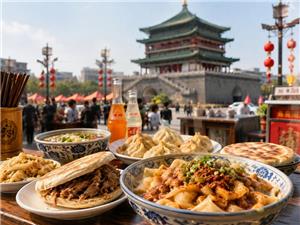
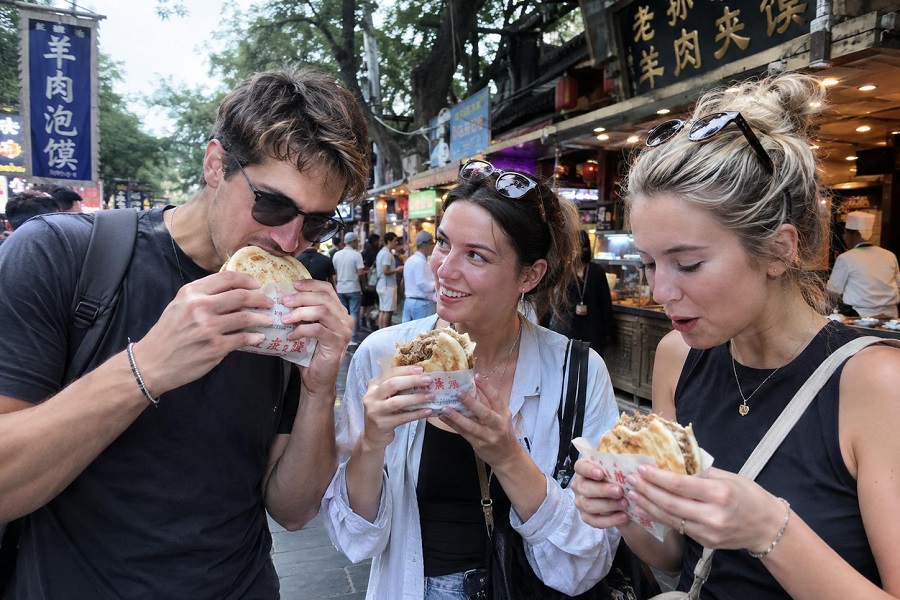
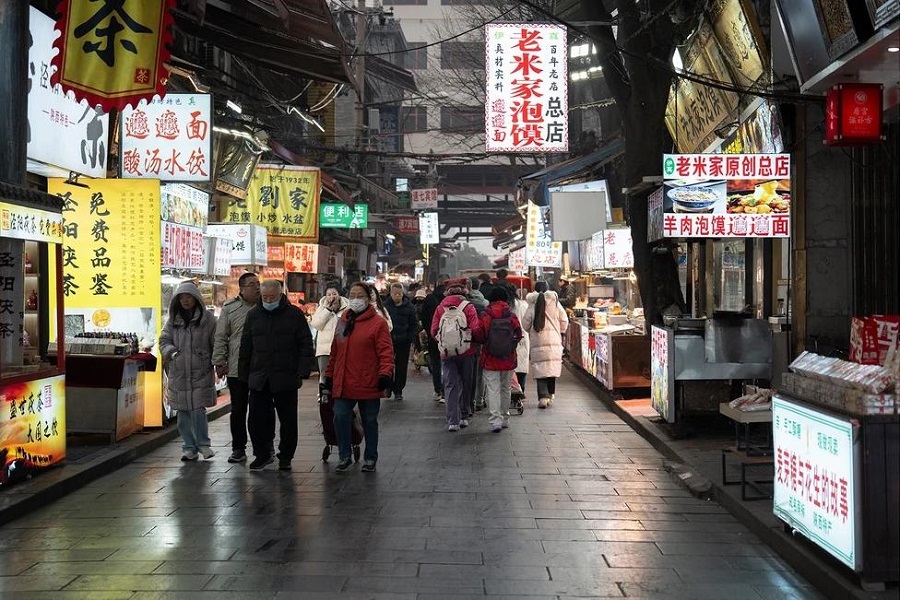
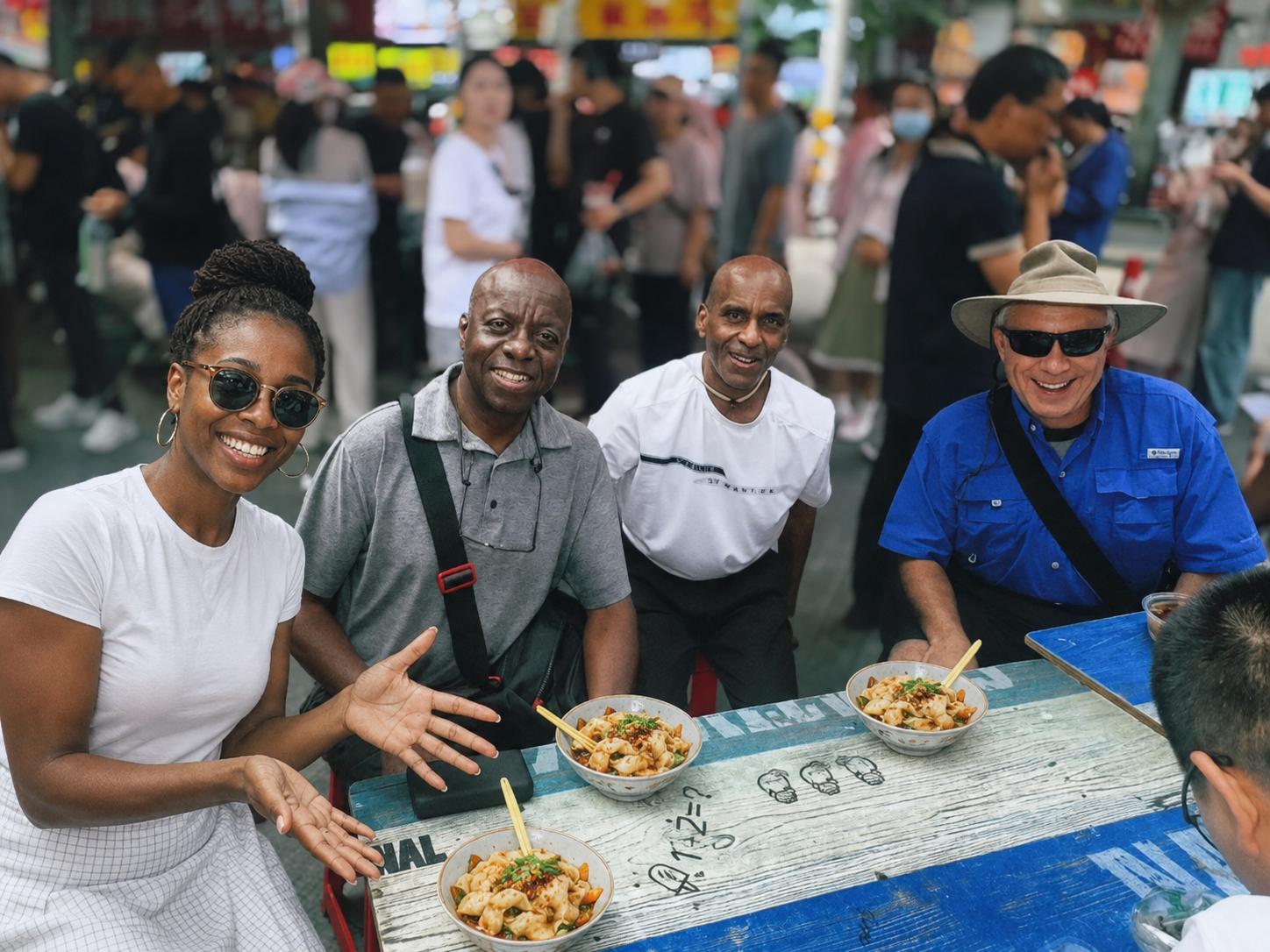
Xi'an is one of the best cities in China to experience authentic street food, with a food culture shaped by centuries of history and the city's diverse local communities. From chewy biangbiang noodles and savory roujiamo to lamb skewers, liangpi, and traditional Shaanxi sweets, Xi'an street food is hearty, flavorful, and often surprisingly affordable.
For first-time visitors, however, knowing what to eat and where to start can be challenging. Some dishes are spicy, while others are mild; some are closely connected with the city's Hui Muslim food culture, while others are everyday Shaanxi specialties. This Xi'an street food guide covers the best foods to try, where to find them, which dishes are spicy or non-spicy, how to order, typical prices, and how to plan your own food walk in Xi'an.
What Makes Xi'an Street Food Special?
Xi'an street food is known for its wheat-based dishes, bold flavors, and strong regional character. Unlike many parts of southern China where rice is a daily staple, Shaanxi cuisine relies heavily on noodles, flatbreads, dumplings, steamed buns, and other wheat-based foods.
A Food Culture Built Around Noodles, Bread and Wheat
Noodles and bread are at the heart of everyday food in Xi'an. You will find everything from wide hand-pulled noodles and cold noodles to stuffed flatbreads, steamed buns, and dumplings. Many dishes are simple in ingredients but filling and full of texture, making them especially popular as quick street meals.
The Flavors of Xi'an: Chili, Vinegar, Cumin and Garlic
The signature taste of Xi'an street food comes from a combination of chili oil, vinegar, cumin, garlic, and fragrant spices. Some dishes are hot and spicy, while others are savory, sour, or completely mild. This variety makes it easy to find something whether you enjoy bold flavors or prefer food without chili.
The Influence of Hui Muslim Food Culture
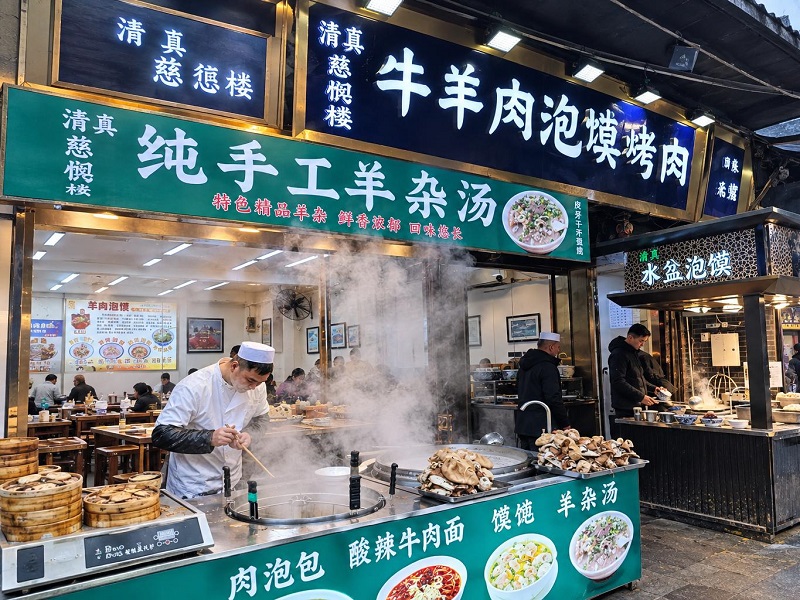
Xi'an's food scene has also been shaped by its long-established Hui Muslim community. Beef, lamb, flatbreads, grilled meat, and aromatic spices are particularly important in this tradition. This influence is especially noticeable in the city's historic Muslim food areas, adding another distinctive layer to Xi'an's street food culture.
Best Xi'an Street Food to Try
Xi'an's street food is all about bold flavors, satisfying textures, and simple ingredients. If you are visiting for the first time, start with a few signature dishes rather than trying everything at once. The choices below are grouped by spice level, making it easier to find something that suits your taste.
Spicy Xi'an Street Food
If you enjoy chili, these are some of the best dishes to start with.
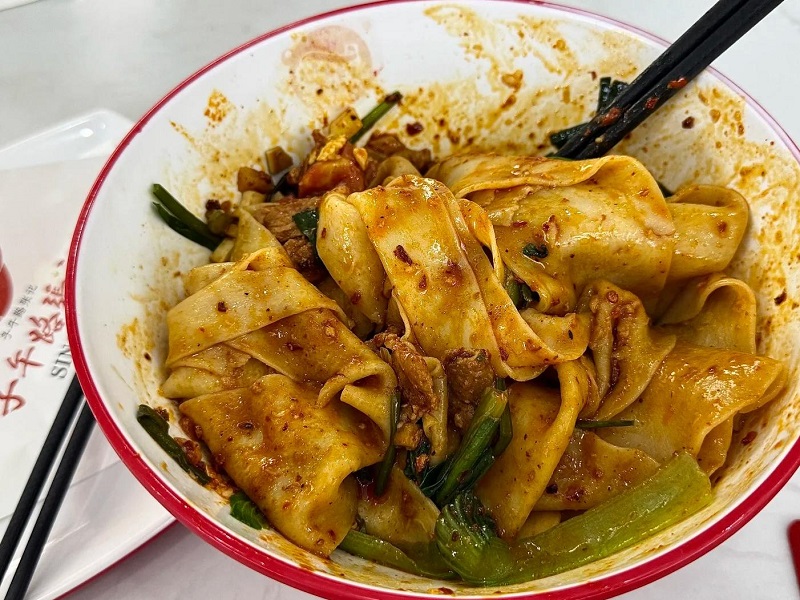
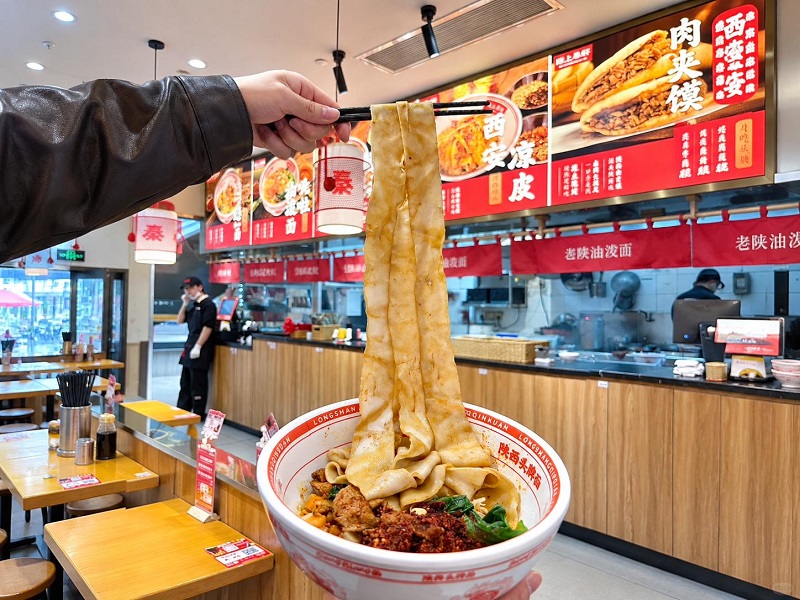
Biangbiang Noodles
These famous Shaanxi noodles are wide, chewy, and usually served with chili oil, vinegar, garlic, and other seasonings. They are filling enough to be a main meal and offer a classic taste of Xi'an.
Spice Level: Medium – Hot
Liangpi
Liangpi are cold, chewy noodles made from wheat or rice starch and usually mixed with chili oil, vinegar, garlic, and other seasonings. Their cool texture and tangy, spicy flavor make them especially refreshing on a warm day.
Spice Level: Mild – Medium
Youpo Mian – Oil-Splashed Noodles
For a stronger chili flavor, try youpo mian. Chili flakes, garlic, and other seasonings are placed over freshly cooked noodles before hot oil is poured over them, releasing a rich aroma and creating a bold, savory flavor.
Spice Level: Medium – Hot
Lamb Skewers
Grilled lamb skewers are a popular street food, especially in the evening. The meat is typically seasoned with cumin and chili before being grilled over charcoal, giving it a smoky, spicy, and aromatic taste.
Spice Level: Mild – Medium
Mild & Non-Spicy Xi'an Street Food
Don't eat spicy food? You still have plenty of Xi'an specialties to choose from.
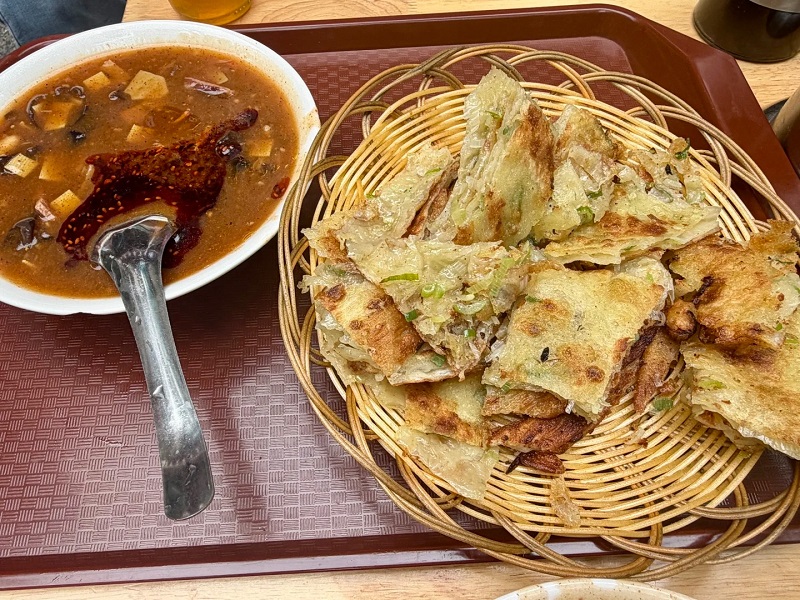
Roujiamo – Xi'an's Famous Meat Burger
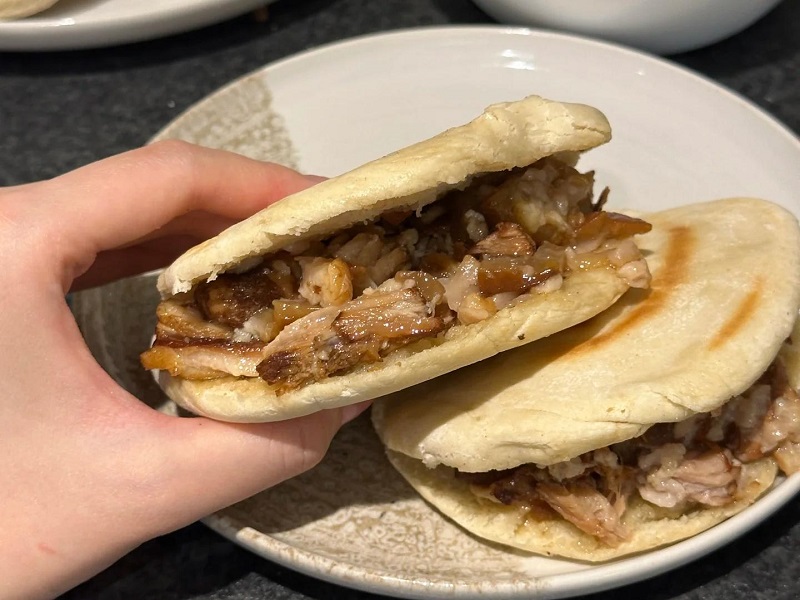
Often called the Chinese hamburger, roujiamo consists of tender braised meat inside a crisp, freshly baked flatbread. Pork versions are common, while halal areas typically offer beef or lamb versions. Ask for no chili if you prefer a mild flavor.
Spice Level: Mild / No Chili
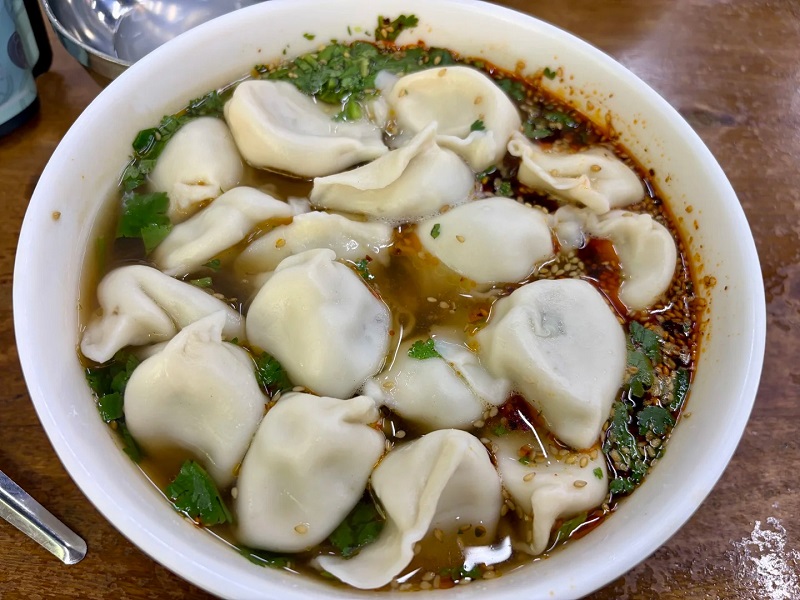
Yangrou Paomo – Lamb Soup with Crumbled Bread
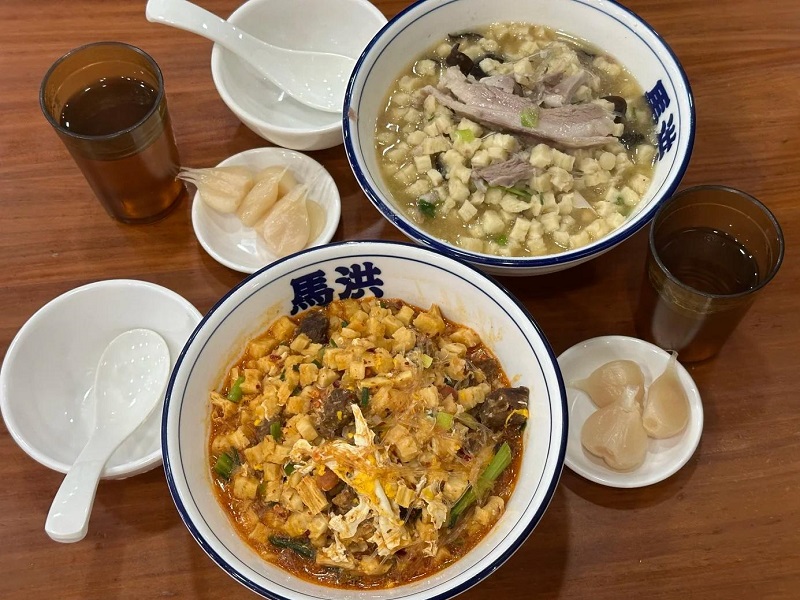
Yangrou paomo is a traditional Xi'an dish made with lamb soup and pieces of flatbread. The bread is traditionally broken into small pieces before being cooked in the broth, creating a hearty and comforting meal without relying on chili for its flavor.
Spice Level: Mild
Guantang Baozi – Soup-Filled Buns
These steamed buns contain a flavorful filling and hot broth inside. They are usually not spicy, but be careful when taking the first bite—the soup can be very hot.
Spice Level: No Chili / Mild
Zenggao – Sticky Rice and Jujube Cake
Zenggao is a traditional Shaanxi sweet made with glutinous rice, red dates, and other ingredients. Soft, sticky, and naturally sweet, it is a good choice when you want a break from Xi'an's savory dishes.
Spice Level: No Chili
Persimmon Cakes
Made with local persimmons and traditionally prepared with a soft, slightly chewy texture, persimmon cakes are one of Xi'an's popular sweet snacks. They are an easy choice for visitors who prefer desserts over spicy street food.
Spice Level: No Chili
Xi'an Street Foods You Can Order Less Spicy
Many Xi'an dishes are served with chili oil or spicy seasoning, but you can often adjust the level when ordering. If you cannot handle spicy food, tell the vendor “不辣 (bù là)” for no spice or “少辣 (shǎo là)” for less spicy. For a completely chili-free option, you can say "不要辣椒 (bú yào làjiāo)", meaning "no chili."
Keep in mind that not every dish can be fully customized. For foods that are already mixed or cooked with seasoning, it is best to ask before ordering.
Where to Find the Best Street Food in Xi'an
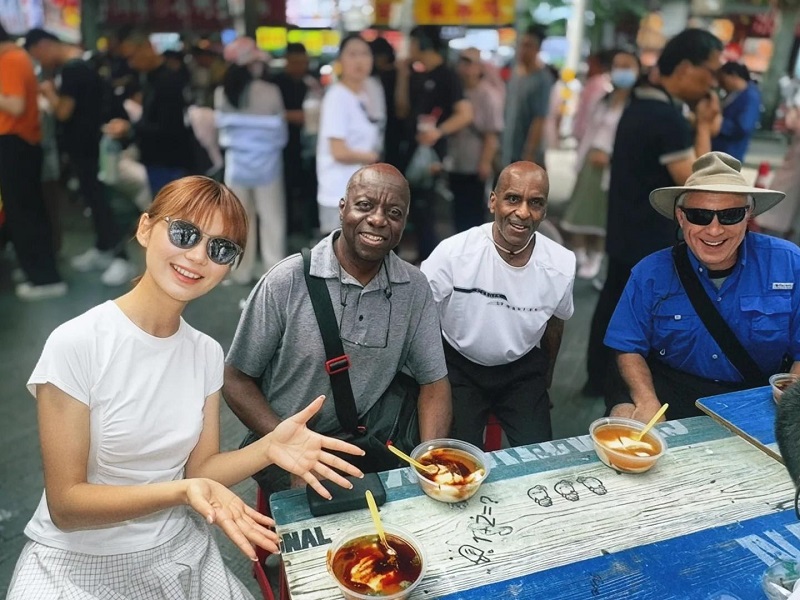
Xi'an has several areas where street food is easy to find, but they offer different experiences. Muslim Quarter is the classic choice for first-time visitors, while nearby streets and local neighborhoods are better if you want to get away from the busiest tourist crowds.
Muslim Quarter – Best for First-Time Visitors
The Muslim Quarter is Xi'an's most famous food area and an easy starting point for first-time visitors. Located around the Drum Tower, its busy streets and surrounding lanes are packed with food stalls, small restaurants, and snack shops.
It is particularly lively in the evening, when the streets fill with locals and visitors looking for something to eat. The area is convenient and offers a wide introduction to Xi'an's food culture, although the main streets can be crowded and more tourist-oriented.
Xiyangshi & Dapiyuan – Explore Beyond the Main Street
For a more relaxed food experience, explore the streets around Xiyangshi and Dapiyuan rather than staying only on the busiest section of the Muslim Quarter. These smaller streets have a more neighborhood-like atmosphere and are a good option for travelers who want to see another side of Xi'an's historic food district.
You do not need a fixed food route here. Simply walking through the lanes and stopping where you see plenty of local customers can be part of the experience.
Sajinqiao – A More Local Street Food Experience
Sajinqiao is worth considering if you want to move beyond Xi'an's best-known tourist food streets. The area has a strong local neighborhood atmosphere and is particularly interesting in the morning, when local residents come out for breakfast.
Compared with the main Muslim Quarter, Sajinqiao generally feels less focused on sightseeing. It is a good choice for travelers who prefer a more everyday side of Xi'an and want to explore local food at a slower pace.
Yongxingfang – An Easy Place to Sample Shaanxi Snacks
Yongxingfang is a convenient choice for visitors who want to sample a variety of Shaanxi specialties in one place. Its food-focused setting makes it easy to try several regional snacks without spending too much time figuring out where to go.
If you have limited time or feel overwhelmed by the choices in the older food streets, Yongxingfang can be a straightforward introduction to Shaanxi flavors. It is more of a curated food destination than a traditional neighborhood street, so the experience is different from exploring Sajinqiao or the lanes around the Muslim Quarter.
How to Choose Xi'an Street Food for Your Trip
With so many local specialties to choose from, the best Xi'an street food depends on how much time you have, what you normally eat, and whether you prefer spicy or mild flavors. These quick suggestions can help you narrow down your choices.
Best Xi'an Street Food for First-Time Visitors
If it is your first trip to Xi'an, start with a mix of the city's most recognizable flavors. Roujiamo is an easy introduction to local street food, while biangbiang noodles showcase Xi'an's famous noodle culture. Add yangrou paomo for a traditional local meal, liangpi for something lighter, and lamb skewers for an evening snack.
You do not need to try all five in one meal. Spread them across a day or two to enjoy a wider range of flavors without overeating.
Best Xi'an Street Food for Breakfast
Xi'an has a strong breakfast culture, and local streets become especially lively in the morning. Hulatang (peppery beef or meatball soup) is a traditional choice, while roujiamo, zenggao, and local steamed buns are convenient options if you want something quick.
For travelers staying in the city center, breakfast is also a good opportunity to explore a more local side of Xi'an before the main tourist areas become busy.
Best Xi'an Street Food for Vegetarians
Vegetarian travelers can still enjoy Xi'an's noodle and snack culture, but ingredients should be checked carefully. Liangpi and vegetarian-style noodles can be good choices when prepared without meat or meat-based broth.
Do not assume a dish is vegetarian simply because it contains vegetables. Ask whether the noodles, soup, sauce, or toppings contain meat, animal broth, or other ingredients you avoid.
Best Xi'an Street Food for Muslim Travelers
Xi'an has a long-established Hui Muslim food tradition, so Muslim travelers have many options, particularly around areas with halal restaurants and food stalls. Look for halal signs and dishes based on beef or lamb rather than assuming that every local specialty is halal.
The key distinction is that Xi'an's overall food culture is broader than its Muslim food tradition. When in doubt, check the ingredients and look for a clearly marked halal establishment.
How to Order Street Food in Xi'an
Ordering street food in Xi'an can feel unfamiliar at first, especially if you do not speak Chinese. Most food stalls are casual and fast-paced, so knowing a few simple phrases and understanding how portions and payment work can make the experience much easier.
Useful Chinese Phrases for Ordering Food
A few basic Chinese phrases are enough for most street food situations:
不辣 (bù là) — Not spicy
少辣 (shǎo là) — Less spicy
不要辣椒 (bú yào làjiāo) — No chili
一份 (yí fèn) — One portion
这个 (zhège) — This one
多少钱? (duōshao qián?) — How much is it?
If you are unsure what a dish contains, showing a photo or pointing at food another customer is eating can also be helpful.
How Much Should You Order?
Xi'an street food can be more filling than it looks, particularly biangbiang noodles, yangrou paomo, and roujiamo. If you are trying several local specialties, avoid ordering a full portion of every dish.
For two people, a good starting point is one main dish, one or two smaller snacks, and a drink, then add more if you are still hungry. Sharing different dishes is one of the easiest ways to experience more of Xi'an's food without wasting food.
Paying at Xi'an Street Food Stalls
Mobile payment is widely used in Xi'an, including at many small food stalls. Alipay and WeChat Pay are the most common options, often using a QR code to complete the payment.
For international visitors, it is worth setting up your preferred mobile payment method before heading out for a food walk. Carrying a small amount of Chinese yuan in cash as a backup is also a good idea, especially when visiting smaller stalls or local markets.
If a payment screen or menu is difficult to understand, ask the vendor to confirm the amount before paying. This simple step can help avoid confusion when ordering several snacks at once.
Xi'an Street Food Prices: How Much Does It Cost?
One of the best things about Xi'an street food is that you can try a wide range of local specialties without spending much. Prices vary by location, portion size, and whether you eat at a simple street stall or a more established restaurant, but street food is generally an affordable way to experience the city.
Typical Prices for Popular Xi'an Street Foods
| Food | Typical Price |
|---|
| Roujiamo | ¥10–20 |
| Liangpi | ¥8–15 |
| Biangbiang Noodles | ¥15–30 |
| Yangrou Paomo | ¥20–40 |
| Lamb Skewers | ¥5–10 per skewer |
| Local Snacks | ¥5–20 |
These are approximate prices rather than fixed rates. Popular tourist areas and well-known shops may charge more, while smaller neighborhood stalls can be cheaper. Prices can also change over time, so use these figures mainly as a guide when planning your food budget.
How to Avoid Overpaying in Tourist Areas
You do not need to avoid the famous food streets altogether, but it is worth checking the price before ordering. Some foods are priced per portion, per skewer, or by weight, so make sure you understand how much you are paying.
Look for a menu or visible price list, and ask "多少钱?" (duōshao qián?) if the price is unclear. If a stall has many local customers and clearly displayed prices, it is usually easier for first-time visitors to order with confidence.
Most importantly, do not assume that the busiest street represents the normal price of Xi'an street food. Exploring nearby lanes and local neighborhoods can give you more choices and sometimes better value.
How to Plan a Xi'an Street Food Walk
A food walk is one of the easiest ways to experience Xi'an. Instead of sitting down for one large meal, leave some room to stop at several stalls and try different local specialties along the way.
Best Time to Explore Xi'an Street Food
Morning is best for experiencing local breakfast, such as roujiamo, hulatang, and zenggao. Afternoon is a good time for lighter snacks like liangpi or a sweet treat, while evening offers the liveliest street food atmosphere, with grilled meat and other hot snacks becoming especially popular.
If you only have limited time, an evening food walk is the easiest option for combining food, local atmosphere, and sightseeing.
A 2–3 Hour Xi'an Street Food Route
You do not need to plan every stop in advance. A simple food walk can follow this order:
Start with a savory main dish → try one or two local snacks → enjoy grilled lamb or another evening specialty → finish with a sweet snack or local drink.
Avoid eating a full portion at every stop. Sharing dishes makes it easier to taste more foods while keeping enough room for the next stop.
What to Eat If You Only Have One Evening in Xi'an
With just one evening, focus on a few signature foods rather than trying to cover the entire city. A practical combination is roujiamo, liangpi, biangbiang noodles, lamb skewers, and a local sweet snack.
You can also combine your food walk with an evening stroll around the historic city center. If you want to explore Xi'an's major attractions as well as its local food culture, a private Xi'an tour can combine sightseeing with carefully planned local dining experiences.
Xi'an Street Food Tips: What to Know Before You Eat
Xi'an street food is easy to explore, but a few simple precautions can make the experience more comfortable, especially for first-time visitors.
Is Xi'an Street Food Safe to Eat?
Choose stalls with a steady flow of customers and food that is prepared or cooked fresh. Pay attention to basic cleanliness, and be a little more careful with foods that have been sitting out for a long time, particularly during hot weather.
You do not need to avoid street food altogether. In many cases, a busy stall where food is constantly being prepared is a good sign that the ingredients have a high turnover.
Is Xi'an Street Food Halal?
Xi'an has a long-established Hui Muslim food tradition, particularly around the city's historic Muslim food areas. Beef and lamb dishes are widely available, and many establishments display halal signs.
However, not every famous Xi'an street food is halal. If this is important to you, look for a clearly marked halal restaurant or stall and check the ingredients before ordering.
Don't Eat Only on the Main Tourist Street
The busiest streets are convenient for first-time visitors, but they are not the only places to eat. If you want a more local atmosphere, explore the smaller lanes around the main food streets or visit neighborhoods such as Sajinqiao.
This also gives you a chance to see how local residents eat, rather than experiencing Xi'an only through its most tourist-oriented food area.
Check the Price Before Ordering
Look for a menu or clearly displayed price before ordering. Some snacks are priced by portion, while others may be charged by skewer or weight.
If you are unsure, simply ask "多少钱?" (duōshao qián?) — "How much?" Confirming the price beforehand is especially useful when ordering several different snacks.
Don't Order Too Many Heavy Dishes
Xi'an's signature foods can be surprisingly filling. A bowl of biangbiang noodles, a serving of yangrou paomo, and a roujiamo may each be enough for a substantial meal.
If you are doing a food walk, share larger dishes and leave room for smaller snacks. This lets you try more without feeling overly full.
Bring Cash as a Backup
Mobile payment is widely used in Xi'an, but carrying a small amount of Chinese yuan is still useful when exploring small stalls, markets, or less touristy neighborhoods.
For international visitors, setting up Alipay or WeChat Pay before your food walk can make ordering and paying much easier.
Best Xi'an Street Food FAQ
What food is Xi'an famous for?
Xi'an is best known for foods such as roujiamo, biangbiang noodles, liangpi, and yangrou paomo. The city's street food is especially famous for wheat-based dishes, bold seasonings, and Hui Muslim food traditions.
What is Xi'an's most famous street food?
Roujiamo is probably the most recognizable Xi'an street food for international visitors. It combines a crisp flatbread with tender braised meat and is easy to eat as a quick snack or light meal.
What should I eat in Xi'an for the first time?
Start with roujiamo, biangbiang noodles, liangpi, and yangrou paomo, then add lamb skewers or a local sweet snack. This gives you a good introduction to Xi'an's different flavors and textures.
Is Xi'an street food spicy?
Some Xi'an street foods are spicy, particularly dishes seasoned with chili oil. However, many dishes are mild or can be ordered with less or no chili.
What can I eat in Xi'an if I don't like spicy food?
Try roujiamo, yangrou paomo, guantang baozi, zenggao, and persimmon cakes. When ordering dishes that normally contain chili, ask for "不辣 (bù là)", meaning "not spicy."
Is Xi'an street food halal?
Some Xi'an street food is halal, particularly beef and lamb dishes served in Hui Muslim food areas. However, not every Xi'an specialty is halal, so look for a clear halal sign and check the ingredients if necessary.
How much does street food cost in Xi'an?
Xi'an street food is generally affordable, with many individual snacks costing around RMB 5–30 depending on the dish and location. Tourist areas and established restaurants may charge more.
Where do locals eat street food in Xi'an?
For a more local experience, consider exploring areas beyond the busiest part of the Muslim Quarter, including Sajinqiao and surrounding neighborhood streets. These areas offer a different atmosphere from the city's main tourist food streets.
Is Muslim Quarter the best place for street food in Xi'an?
It is one of the easiest places for first-time visitors because many famous foods are concentrated in one area. However, it is not the only option. Travelers looking for a more local experience can explore nearby lanes or neighborhoods such as Sajinqiao.