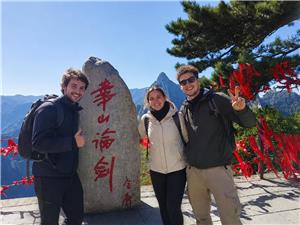
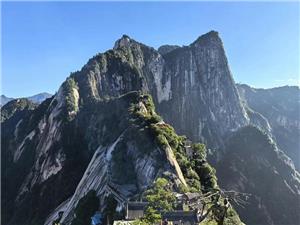
Mount Hua, also known as Huashan Mountain, is one of China's Five Great Mountains and one of the most dramatic mountain destinations near Xi'an. Famous for its steep granite peaks, narrow mountain paths, sheer cliffs, and spectacular views, Huashan offers a very different experience from the historic sites and city attractions of Xi'an.
For many travelers, the biggest question is not whether Huashan is beautiful, but how difficult it is to visit. Some routes involve steep stairways and exposed sections, while cable cars make it possible to enjoy the mountain without completing a full-day hike. The famous Huashan Plank Walk, built along a near-vertical cliff face, is an optional adventure for those looking for an extra challenge.
Huashan is also one of the easiest major mountain attractions to visit from Xi'an. With high-speed trains connecting Xi'an North Railway Station and Huashan North Railway Station, many travelers choose to visit Huashan as a day trip from Xi'an, while others stay overnight to experience the mountain at sunset or sunrise.
This Huashan Mountain travel guide covers everything you need to plan your visit, from hiking trails, the Plank Walk, and the Five Peaks to cable cars, ticket prices, transportation, accommodation, hiking difficulty, weather, and practical safety tips. Whether you want a challenging hike or a more comfortable cable-car experience, you can use this guide to choose the route and itinerary that best fits your trip.
Why Visit Huashan Mountain?
What Makes Mount Huashan Different from Other Chinese Mountains?
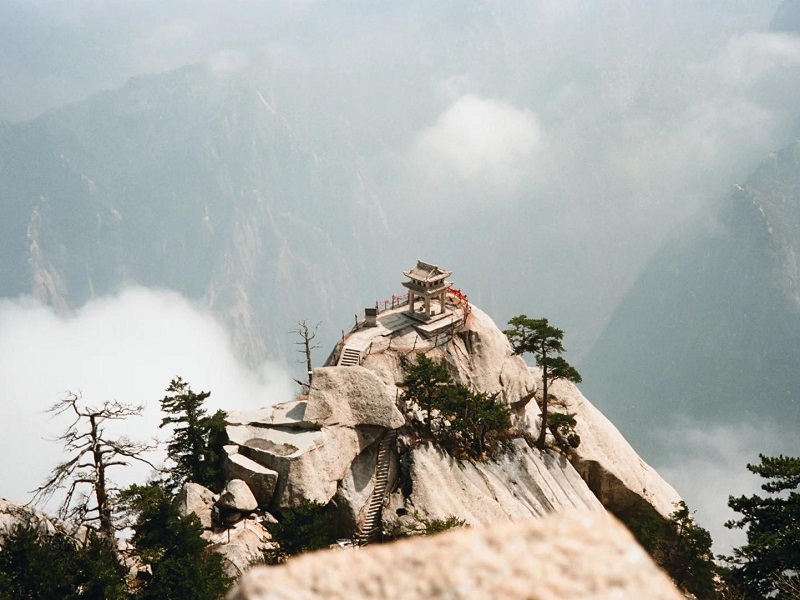
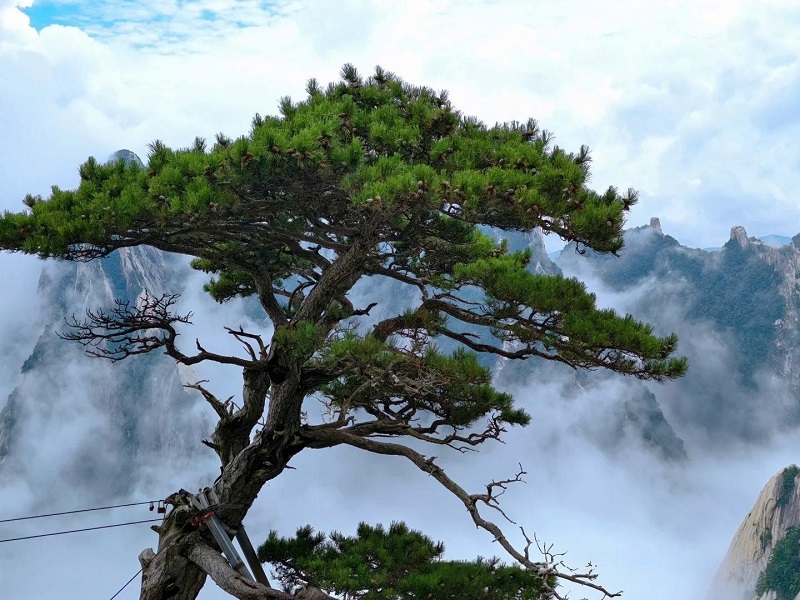
Mount Hua is one of China's Five Great Mountains, famous for its dramatic granite peaks, narrow ridges, steep stairways, and sheer cliffs. Unlike many mountain attractions where the main experience is simply reaching a summit, Huashan combines dramatic scenery with a thrilling hiking experience. Its five main peaks offer different views, while historic temples and Taoist sites add a cultural side to the journey.
Is Huashan Mountain Worth Visiting from Xi'an?
Yes. Huashan is one of the best mountain day trips from Xi'an, and high-speed trains make the journey relatively easy. A one-day visit is enough for the classic cable-car and hiking experience, while staying overnight is a better choice if you want to see sunrise or sunset. For travelers who have already explored Xi'an's historical attractions, Huashan also provides a completely different outdoor experience.
Who Is Huashan Mountain Best For?
Huashan works well for different types of travelers because you do not have to complete the entire mountain on foot. Hikers can take on longer and steeper trails, while first-time visitors and travelers with limited time can combine cable cars with shorter walks. Adventure seekers can add experiences such as the famous Plank Walk, while visitors who prefer a more relaxed trip can focus on the main viewpoints without attempting the most demanding sections.
Huashan Mountain Plank Walk Guide
What Is the Huashan Mountain Plank Walk?
The Huashan Plank Walk is one of the mountain's most famous attractions and one of its most unusual hiking experiences. Narrow wooden planks are fixed along a steep cliff face, with chains and safety equipment helping visitors move along the exposed section. Rather than being a normal hiking trail, it is an optional adventure experience for travelers who want to test their nerves while enjoying views from the mountainside.
Is the Huashan Plank Walk Dangerous?
The Plank Walk looks intimidating because of its height and exposure, but visitors use safety harnesses and fixed chains while crossing the section. The bigger challenges are often fear of heights, narrow passages, crowds, and waiting in line rather than technical climbing. Weather conditions can also affect the experience, so always check conditions before heading to the trail.
How to Get to the Plank Walk
The Plank Walk is located near South Peak and requires additional walking after reaching the main mountain area. It is not directly beside the cable-car stations, so visitors should allow extra time if they want to include it in their itinerary. Follow the signs for Chang Kong Plank Walk (长空栈道) once you are on the mountain.
Do You Have to Do the Plank Walk?
No. You can enjoy Huashan without doing the Plank Walk. The mountain has plenty of spectacular viewpoints and hiking trails, so skipping it will not make your trip incomplete. If you are uncomfortable with heights or have limited time, it is perfectly reasonable to leave the Plank Walk out of your itinerary.
Mount Hua Hiking Trails
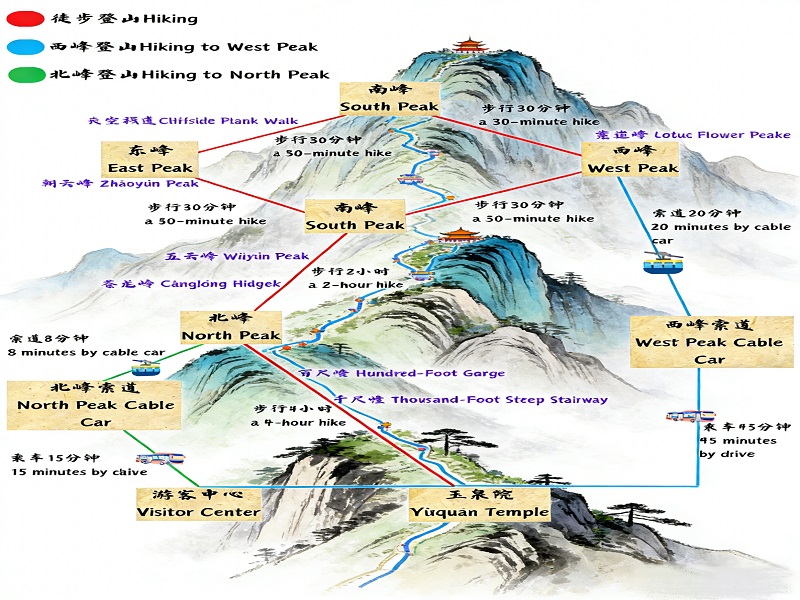
Huashan offers several hiking options, from a classic cable-car-assisted route to a demanding full ascent from the foot of the mountain. The best route depends mainly on how much time and energy you have.
West Peak Up & North Peak Down
For first-time visitors, taking the cable car up to West Peak and returning via North Peak is one of the most practical choices. You can reach the higher part of the mountain without spending hours climbing from the bottom, then walk between the main peaks before descending by the North Peak cable car.
This route gives you a good balance of scenery, hiking, and time efficiency, making it particularly suitable for a Huashan day trip from Xi'an.
North Peak Up & West Peak Down
The reverse route starts with the North Peak cable car and gradually climbs toward the higher peaks before descending from West Peak. It involves more uphill walking than the West Peak-up route, but rewards hikers with a more progressive mountain experience.
Choose this option if you enjoy hiking and want to spend more time walking rather than relying on the cable car for the main ascent.
Full Huashan Mountain Hiking Route
For experienced hikers, the traditional route from the mountain foot offers the most complete challenge. Instead of using a cable car for the main ascent, you climb through a long series of steep stairs and mountain paths before reaching the main peaks.
This option requires considerably more time and physical effort and is not necessary for most visitors. If your main goal is to experience Huashan's scenery rather than complete a serious hike, a cable-car-assisted route is usually more practical.
West Peak Cable Car Round Trip
If you have limited time or prefer not to undertake a long hike, taking the West Peak cable car both ways is the easiest way to experience the higher mountain area. You can walk around the main viewpoints after reaching the top without committing to a full descent.
It is a good option for travelers who want dramatic mountain scenery but are not confident about tackling Huashan's steep trails.
Which Huashan Hiking Route Should You Choose?
First-time visitors: West Peak up and North Peak down
More hiking, less cable car: North Peak up and West Peak down
Experienced hikers: Full mountain hike
Limited time or lower physical demands: West Peak cable car round trip
Sunrise travelers: Stay overnight and plan the route around East Peak
Huashan Mountain's Five Peaks: Which One Should You Visit?
Huashan has five main peaks, each with a different character. You do not need to spend equal time at all five; your route and interests can determine which peaks deserve the most attention.
South Peak – The Highest Peak
At around 2,155 meters, South Peak is the highest point of Huashan and a natural highlight for hikers who want to reach the summit. The surrounding cliffs and wide mountain views make the summit experience more impressive than simply checking off another peak.
West Peak – The Most Dramatic Scenery
West Peak is known for its distinctive rocky landscape, steep cliffs, and spectacular views. It is also the arrival point for the West Peak cable car, making it especially convenient for visitors taking the cable-car-assisted route.
If you want dramatic scenery without committing to a full mountain ascent, West Peak is one of the most rewarding areas to prioritize.
East Peak – The Best Place for Sunrise
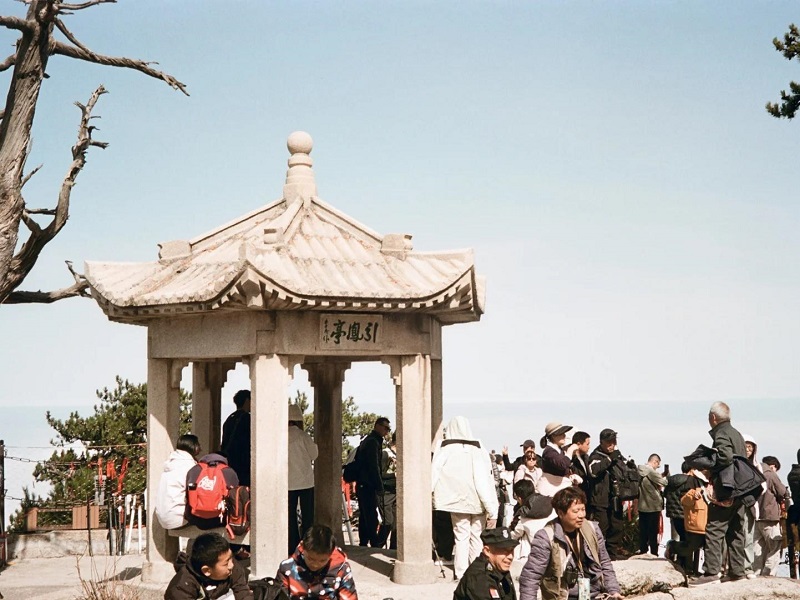
East Peak is particularly popular for sunrise views. Travelers staying overnight on the mountain often head here early in the morning to watch the first light spread across the surrounding peaks.
If sunrise is one of your main reasons for visiting Huashan, plan your accommodation and hiking route around East Peak rather than treating it as just another stop.
North Peak – The Starting Point for Many Cable-Car Routes
North Peak is lower than the other major peaks and is closely connected with the North Peak cable car. It is an important point in many hiking itineraries, especially for travelers who take the cable car up one side of the mountain and descend from another.
Its role in the route makes it more important from a trip-planning perspective than simply as another summit to visit.
Central Peak – A Short Stop Along the Ridge
Central Peak is a smaller stop between the major sections of the mountain. It is easy to include when walking between the main peaks, but most visitors do not need to plan their entire itinerary around it.
For a first visit, prioritize South Peak for the highest point, West Peak for dramatic scenery, and East Peak for sunrise, then include Central and North Peaks according to your chosen route.
How Tall Is Huashan Mountain?
What Is the Highest Point of Huashan?
The highest point of Huashan is South Peak, at about 2,155 meters (7,070 feet) above sea level. Although this is not exceptionally high compared with some of China's other mountains, Huashan feels much more dramatic because of its steep granite cliffs, narrow ridges, and exposed stairways.
How Much Do You Actually Have to Climb?
The total amount of climbing depends on your route. If you use the cable car, you can reach the higher parts of the mountain and spend most of your time walking between the main peaks. A traditional hike from the mountain foot involves many hours of continuous uphill stairs and requires significantly more energy.
For most visitors, the key question is therefore not simply Huashan's altitude, but how much of the mountain you plan to climb on foot.
Is Huashan Mountain Difficult to Climb?
Huashan is considered a challenging hike, mainly because of its steep stairs, long climbs, narrow paths, and frequent changes in elevation. You do not need advanced mountaineering skills for the standard routes, but a reasonable level of fitness is important.
Using the cable car can greatly reduce the hardest part of the ascent. Even then, expect plenty of stairs, and remember that descending can be particularly tiring on the knees. Comfortable hiking shoes, enough water, and a realistic schedule are more important than trying to cover every peak.
How to Plan a Xi'an to Huashan Tour Itinerary
Xi'an to Huashan as a Day Trip
Huashan is one of the easiest major mountain trips to make from Xi'an. A typical day follows this pattern:
Xi'an → Huashan North Railway Station → Huashan Tourist Center → Cable Car → Main Peaks → Cable Car Down → Xi'an
The high-speed train journey from Xi'an North to Huashan North takes roughly 30–40 minutes, making it possible to leave Xi'an in the morning and return the same evening.
For a first visit, start early and allow enough time for transportation, cable-car queues, hiking, and the journey back to the railway station.
One-Day Huashan Itinerary
A one-day trip works best when you use the cable car to save energy and focus on the main mountain area. Arrive at Huashan early, take the chosen cable car, walk between the key peaks, and leave enough time for the descent and transfer back to Huashan North Railway Station.
Avoid planning too many additional attractions on the same day. Huashan itself can easily fill an entire day, especially when crowds or cable-car queues are taken into account.
Two-Day Huashan Itinerary
A two-day trip gives you much more flexibility. Instead of rushing back to Xi'an, you can spend the first day hiking and exploring the main peaks, stay overnight near or on the mountain, and watch the sunrise the following morning.
This option is particularly worthwhile for travelers who want to hike at a slower pace, experience sunset, or avoid squeezing the mountain into a single day.
Can You See Sunrise and Sunset on the Same Huashan Trip?
Yes, but you will need to stay overnight. The easiest approach is to arrive early enough to explore the mountain during the day, stay at accommodation on or near the mountain, and then head to East Peak for sunrise the following morning.
If sunrise is not a priority, a one-day trip from Xi'an is usually simpler and more efficient. If sunrise and sunset are major reasons for visiting, a two-day itinerary provides a much more relaxed experience.
How to Get to Huashan Mountain from the Railway Station
From Huashan North Railway Station to Huashan Tourist Center
Huashan North Railway Station is the most convenient station for travelers arriving by high-speed train from Xi'an. It is only a few kilometers from the Huashan scenic area, and you can take a local shuttle, taxi, or other transfer to the Huashan Tourist Center, where you buy tickets and start your mountain trip.
From Huashan Railway Station to Huashan Mountain
Do not confuse Huashan Railway Station with Huashan North. Huashan Railway Station mainly serves conventional trains and is farther from the main tourist center. A taxi or local transfer is usually needed to continue to the scenic area.
Which Railway Station Is Better for Huashan?
For most international visitors, Huashan North Railway Station is the better choice, especially when traveling from Xi'an by high-speed train. Huashan Railway Station is more relevant to travelers using conventional trains or planning to access the traditional hiking area.
How to Choose Huashan Mountain Accommodation
Hotels Near Huashan Mountain
Hotels around the Huashan Tourist Center and mountain foot are the most convenient choice for most visitors. They offer easier access to restaurants, transport, and the scenic area, making them ideal for travelers arriving the night before a day trip.
Hotels on Huashan Mountain
Staying on the mountain makes more sense if you want to watch sunset or sunrise without rushing. Mountain hotels are more basic and usually more expensive, but their biggest advantage is location—you can stay close to the viewpoints and avoid a long climb before sunrise.
Should You Stay Near Huashan or on the Mountain?
Day trip from Xi'an: Stay in Xi'an or near the mountain foot.
Early start: Choose a hotel near the Tourist Center.
Sunrise or sunset: Stay on Huashan Mountain.
Long hiking trip: Staying on the mountain can make the schedule more relaxed.
Huashan Mountain Ticket & Cable Car Price
Huashan costs more than a simple mountain entrance ticket because most visitors also need to pay for cable cars and shuttle buses. Your total cost depends mainly on whether you hike from the bottom or use the cable cars.
Huashan Mountain Entrance Ticket
The entrance ticket covers access to the main Huashan scenic area and its hiking trails. Prices can vary by season, so check the official ticket platform before your trip, especially during holidays and peak travel periods.
Huashan Cable Car Prices
Huashan has two main cable cars:
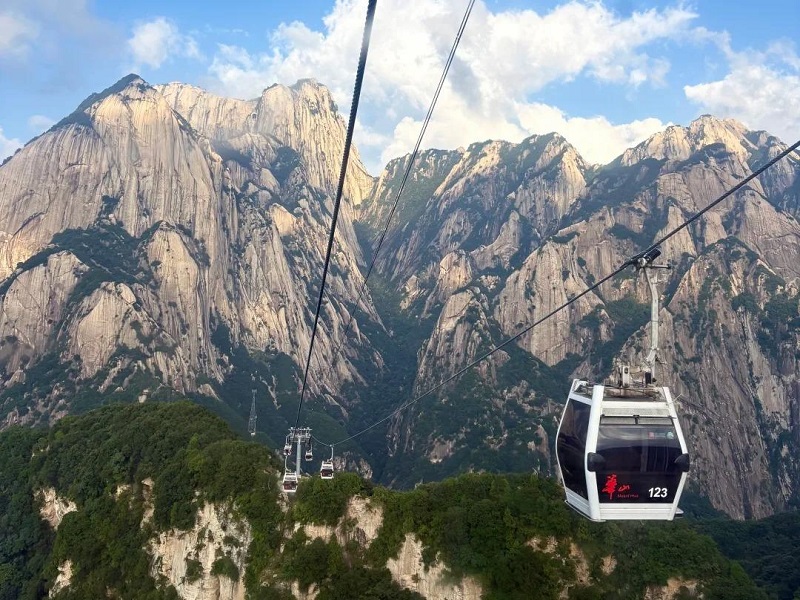
West Peak Cable Car: The more popular choice for visitors who want to reach the higher part of the mountain quickly and explore the main peaks.
North Peak Cable Car: A practical option for shorter hiking routes or for visitors planning to enter from North Peak and walk toward the higher peaks.
Cable car tickets are normally charged separately from the entrance ticket, and one-way and round-trip options may be available.
Tourist Shuttle Bus Fees
After entering the scenic area, shuttle buses connect the Huashan Tourist Center with the cable car stations. These transfers are an additional cost and should be included when calculating your total trip budget.
Extra Fees for the Plank Walk and Other Adventure Trails
Some special experiences, including the Huashan Plank Walk, may require an additional fee or separate reservation. These activities are optional, so you can visit the main peaks without adding them to your budget.
How Much Does a Huashan Trip Cost in Total?
For a day trip from Xi'an, budget for high-speed train + entrance ticket + shuttle bus + cable car, plus any optional activities. The easiest way to reduce costs is to hike more and use fewer cable-car services, while the most convenient option is to combine the entrance ticket with cable cars for the main ascent and descent.

How Were the Huashan Mountains Formed?
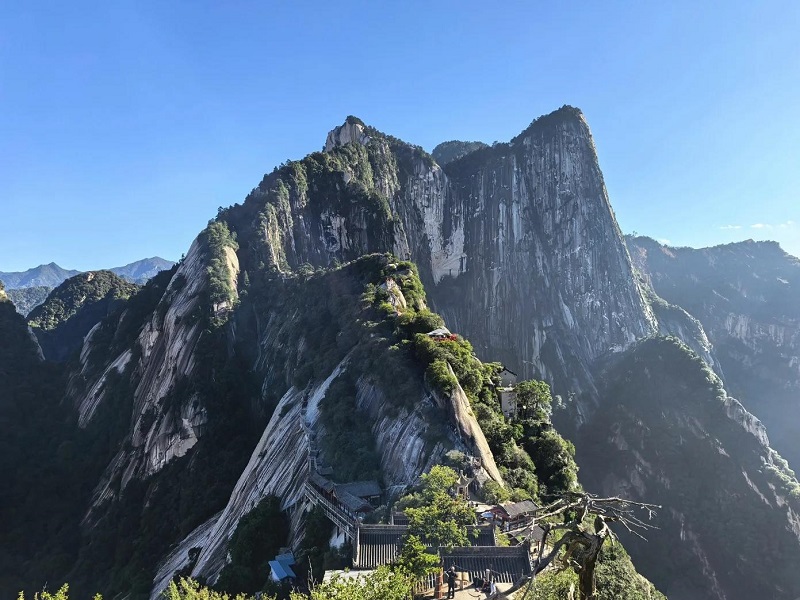
Huashan's dramatic appearance comes from its granite rock, geological uplift, and long-term erosion. Over geological time, these processes shaped the massive rock formations, steep cliffs, and distinctive peaks that visitors see today.
Huashan's Granite Peaks and Steep Cliffs
Much of Huashan is made of hard granite. As the surrounding rock was gradually weathered and eroded, the resistant granite remained as dramatic ridges and cliffs, helping create the mountain's distinctive landscape.
Why Is Huashan So Steep?
The mountain's steep profile is the result of tectonic movement, fractured rock, weathering, and erosion over a very long period. Natural forces gradually exposed and sculpted the granite, creating the sharp ridges and near-vertical cliff faces that make Huashan famous.
How Geology Shaped Huashan's Five Peaks
The five main peaks are part of the same dramatic mountain landscape, but differences in rock structure and erosion helped create their individual shapes and elevations. Today, these formations give Huashan its characteristic five-peak skyline, narrow ridges, deep valleys, and spectacular cliff scenery.
Best Time to Visit Huashan Mountain
Best Months for Hiking
Spring and autumn are generally the best seasons for hiking Huashan. The weather is usually more comfortable than in summer or winter, with better conditions for long walks and clearer mountain views. April to May and September to October are particularly popular, so expect more visitors during holidays and weekends.
Huashan in Summer
Summer offers long daylight hours and a chance to see cloud seas around the peaks, but temperatures can be high during the daytime. Afternoon rain and sudden weather changes are also possible. Start early, bring enough water, and check the weather forecast before setting out.
Huashan in Winter
Winter brings cold temperatures, snow, ice, and potentially slippery trails. The mountain can look spectacular after snowfall, but hiking conditions are more demanding. If you visit in winter, wear shoes with good grip and check trail and cable-car conditions in advance.
Best Time of Day to Start Hiking
Start as early as possible, especially for a day trip from Xi'an. An early start gives you more time to explore the peaks, reduces the risk of hiking in the afternoon heat, and leaves a safety margin for cable-car queues and the journey back to Huashan North Railway Station.
If you want to watch sunrise, stay overnight and plan your route around East Peak rather than trying to travel from Xi'an on the same morning.
Huashan Mountain Travel Tips
Huashan Mountain Hiking Difficulty & Safety Tips
- Huashan is challenging mainly because of its steep stairs, long climbs, and exposed sections. You do not need climbing experience for the standard routes, but a reasonable level of fitness is important.
- Wear comfortable hiking shoes with good grip and bring water, sun protection, a light jacket, and a power bank. Avoid carrying unnecessary luggage, as you will be walking up and down many stairs.
- The descent can be hard on your knees, especially after a long hike. If you feel tired, using a cable car for the descent is a practical way to reduce the strain.
- Avoid hiking during heavy rain, strong winds, thunderstorms, or icy conditions. Mountain weather can change quickly, so check the forecast and operating conditions before leaving.
What to Know Before Visiting Huashan Mountain
- How much time you need depends on your route. A cable-car-assisted visit can take around 3–4 hours, while a classic route covering the main peaks usually takes 5–7 hours. A full hike from the mountain foot can take 10 hours or more.
- Children and older travelers can still enjoy Huashan, but a cable-car-assisted itinerary is usually more comfortable than a full ascent. The most demanding trails and adventure sections can simply be skipped.
- Night hiking is possible for travelers who want to see the sunrise, but it requires more preparation and is best planned around overnight accommodation and East Peak sunrise.
Huashan Mountain Travel Tips for First-Time Visitors
- Book your high-speed train and mountain tickets in advance, particularly during weekends and Chinese public holidays. For a day trip from Xi'an, choose an early train so you have enough time on the mountain.
- Allow extra time for shuttle buses, cable cars, and queues. Do not schedule your return train too tightly, especially during peak seasons.
- Finally, always check the weather, trail conditions, and cable-car operating status before departure. On Huashan, weather can affect both safety and visibility, so a flexible itinerary is always better than trying to follow a fixed schedule at all costs.
Frequently Asked Questions About Huashan Mountain
Is Huashan Mountain Worth Visiting from Xi'an?
Yes. Huashan is one of the easiest major mountain destinations to visit from Xi'an, and its dramatic cliffs and hiking trails offer a completely different experience from Xi'an's historical attractions.
How Many Hours Do You Need at Huashan?
Plan for around 5–7 hours for a classic cable-car-assisted visit. A full hike from the mountain foot can take 10 hours or more, while a shorter cable-car sightseeing trip may take around 3–4 hours.
Is Huashan Harder Than the Great Wall?
For most visitors, Huashan is more physically demanding than walking the Great Wall because of its steep stairs, longer climbs, and frequent elevation changes. However, cable cars allow you to significantly reduce the hardest sections.
Can You Visit Huashan Without Hiking?
Yes. You can take the cable car to the upper mountain and walk between the main viewpoints. This is a good option if you have limited time or do not want to complete a long mountain hike.
Is the Huashan Plank Walk Safe?
The Plank Walk uses fixed chains and safety equipment, but it is still an exposed cliffside experience and can be intimidating for people with a fear of heights. It is optional and should be avoided in poor weather.
Which Cable Car Is Better at Huashan?
The West Peak Cable Car is generally more convenient for first-time visitors who want to explore the higher peaks. The North Peak Cable Car is better suited to routes that start from North Peak and continue toward the higher peaks.
Can You Visit Huashan in One Day from Xi'an?
Yes. High-speed trains make Huashan a practical Xi'an day trip. Start early, use the cable car to save time, and leave enough time for the return journey to Huashan North Railway Station.
Where Should I Stay for Huashan Sunrise?
For sunrise, staying on Huashan Mountain is the most convenient option, especially near East Peak. Staying near the mountain foot is more comfortable and affordable but requires an early climb or transfer before sunrise.
Can Foreign Tourists Visit Huashan Independently?
Yes. International visitors can visit Huashan independently by arranging their own train, tickets, transportation, and accommodation. However, a private tour can be more convenient if you want help coordinating the train, cable cars, tickets, and hiking route.